Ingredients
Method
- Stir the flour, yeast, sugar and salt together in a large bowl until the salt is spread right through.
- Pour in 300 ml of the lukewarm water and the oil, then work it into a shaggy dough with one hand, adding the last 20 ml only if dry flour is left.
- Knead on a floured bench for 10 minutes, until the dough is smooth and springs back when you press it with a finger.
- Cover the bowl with a tea towel and leave it somewhere warm for 45 to 60 minutes, until it has doubled in size.
- Knock the dough back, divide it into 8 pieces, roll each into a ball and flatten it to about 2 cm thick.
- Cover the shaped rolls and rest them for 15 minutes while the fire burns down to low, even coals with a grey coat of ash.
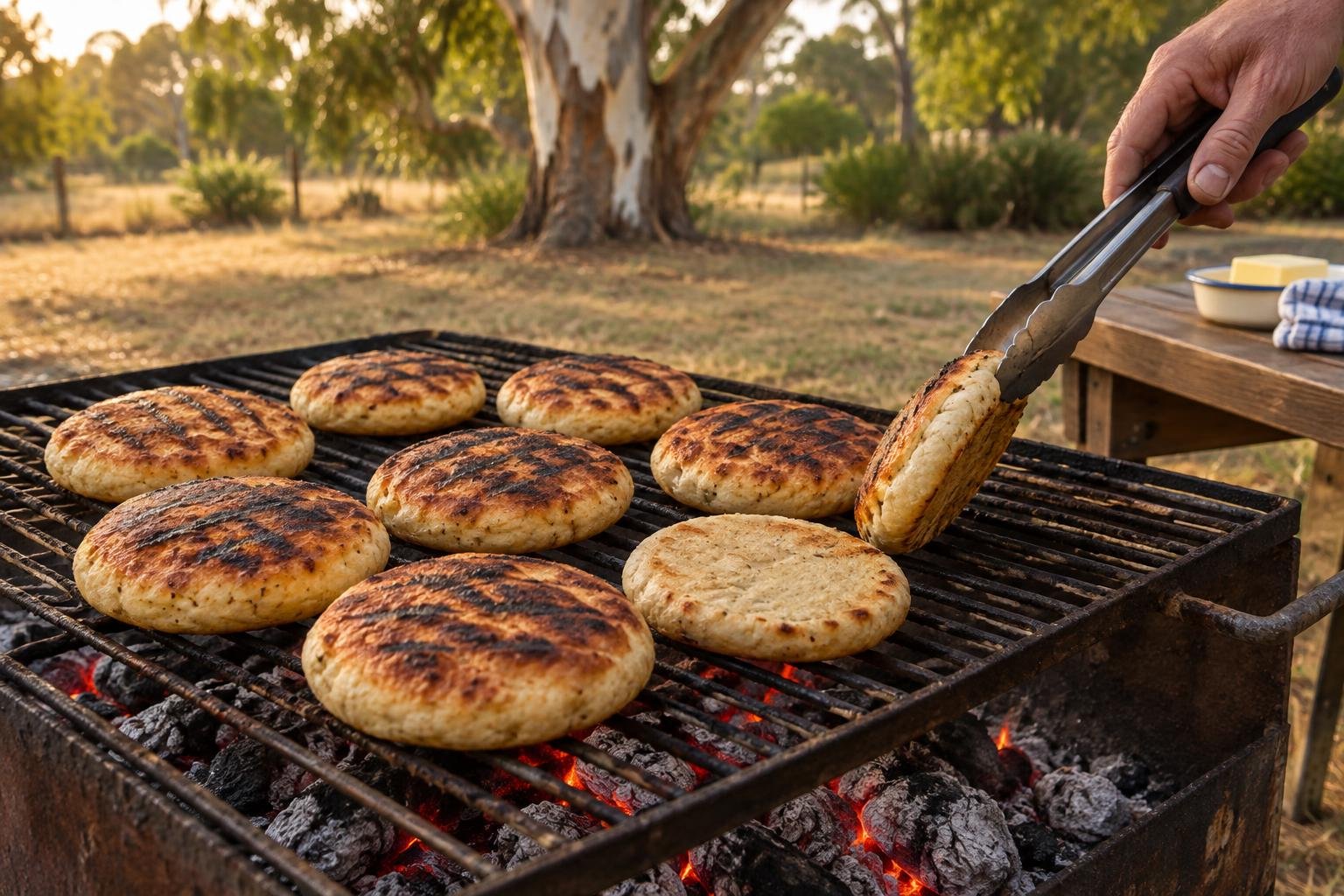
- Oil the grid, set it about 15 cm above the coals, and cook the roosterkoek for 15 to 20 minutes, turning every 3 or 4 minutes.
- They are ready when both sides are browned and a roll sounds hollow when you tap it. Split them while hot and butter them.
Notes
Quantities are our own working version, built around a 500 g bag measure and a single 7 g Australian yeast sachet. Water is the number to watch. Plain flour drinks less than bakers flour, so start at 300 ml and keep the last 20 ml in the jug until you can see whether the dough needs it.