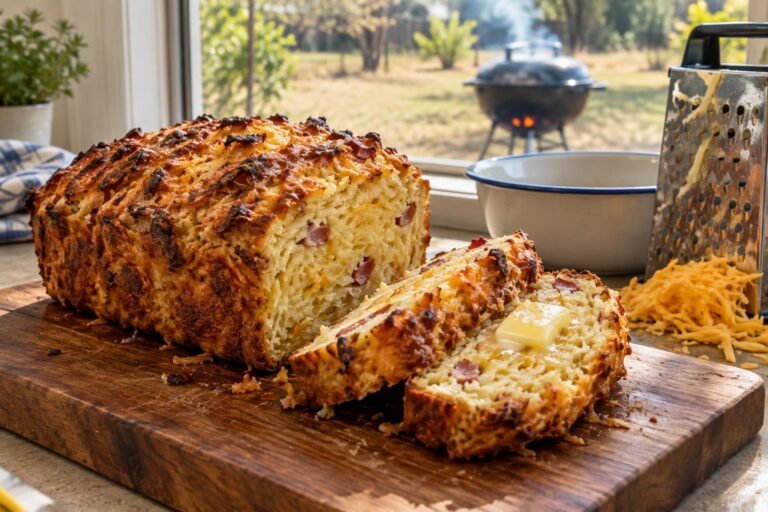
A roosterkoek recipe is a bread dough you cook straight on the braai grid, over coals, instead of in an oven. The name is Afrikaans for grid cake, and that is exactly what it is: a flat round of risen dough, turned every few minutes until it is browned on both sides and hollow when you tap it.
The recipe below is scaled for an Australian kitchen, which is where most South African versions trip you up. They call for a kilo of cake flour and a 10 g yeast packet. Our shelves sell plain flour, bakers flour and 7 g yeast sachets. So this post starts with what to buy, then gives our working recipe, then three ways to cook it depending on your fire.
Table of Contents
What roosterkoek actually is
Roosterkoek (say it roo-ster-cook) is braai bread. Same family as a bread roll, but the heat comes from below rather than all around, so the outside dries and browns while the middle steams. You get a crust with bar marks on it and a soft, slightly smoky crumb underneath.
It is not a braaibroodjie, which is a toasted sandwich made from bread that already exists. If that is what you were after, our braaibroodjies with Australian ingredients covers it. It is also not potbrood, the yeast loaf baked inside a closed camp oven under coals. Roosterkoek sits out in the open on the grid, which is why the fire matters more than the dough.
At home it goes on while the meat rests, and it exists to mop up. Butter first, then whatever is left in the pan.
The flour question: what to buy in Australia
South African recipes say cake flour, and that word does not mean the same thing here. In South Africa, cake flour is the everyday soft flour that sits in most pantries. In Australia, the everyday pantry flour is plain flour, and the shelf next to it also carries self-raising flour and bakers flour. Grabbing the wrong one changes the roll.
Here is the short version.
- Plain flour. The closest match to what a South African recipe means, and what we use. Soft crumb, easy to knead, forgiving if you are eyeballing the water.
- Bakers flour or bread flour. Stronger, with more protein. Laucke describes its Wallaby bakers flour as a strong flour for yeast raised products with good water absorption, which is a polite way of saying it drinks more water and fights back when you knead it. The roll comes out chewier and holds its shape better on the grid.
- Self-raising flour. Not for this. It carries its own raising agent, which does not survive a long rise, and you end up with a flat, cakey disc.
If you want numbers, look at the panel on the bag rather than the front of it. Lighthouse lists 12.5 g of protein per 100 g on its Bread and Pizza plain flour, and calls it a strong, high protein plain flour. A standard supermarket plain flour sits lower than that. Neither is wrong for roosterkoek. The higher number gives you a chewier roll that will not sag through the bars, the lower number gives you a softer one. Just add a little more water when the protein figure is high.
Whichever you buy, weigh it if you can. Cups of flour vary by how hard you pack them, and this dough is decided by the flour to water ratio more than by anything else.
Yeast: sachets here, packets there
The other quiet swap is the yeast. South African recipes usually call for a 10 g packet of instant yeast. Australian supermarkets sell it in 7 g sachets, which is why the numbers never line up.
Our recipe is built around one 7 g sachet for 500 g of flour, so there is nothing to convert. If you are following a South African recipe that calls for 10 g, use one and a half sachets, or use one and give the dough an extra twenty minutes to rise. Instant yeast goes in dry with the flour. Lighthouse says the same thing about its own sachets: where a recipe asks for one 7 g sachet of dried yeast, one sachet is what you use, no soaking, no frothing in a mug.
Keep the salt away from the yeast until the flour is mixed through. Salt sitting directly on yeast slows it down, and on a cold morning you need all the lift you can get.
The roosterkoek recipe, scaled for one braai
This roosterkoek recipe makes eight rolls from 500 g of flour, which is enough for four hungry people alongside meat. Count on about an hour and a half from the bowl to the grid, most of it waiting, and twenty minutes of turning at the fire. The quantities are our own working version rather than anyone’s family recipe. Watch the water instead of the clock.
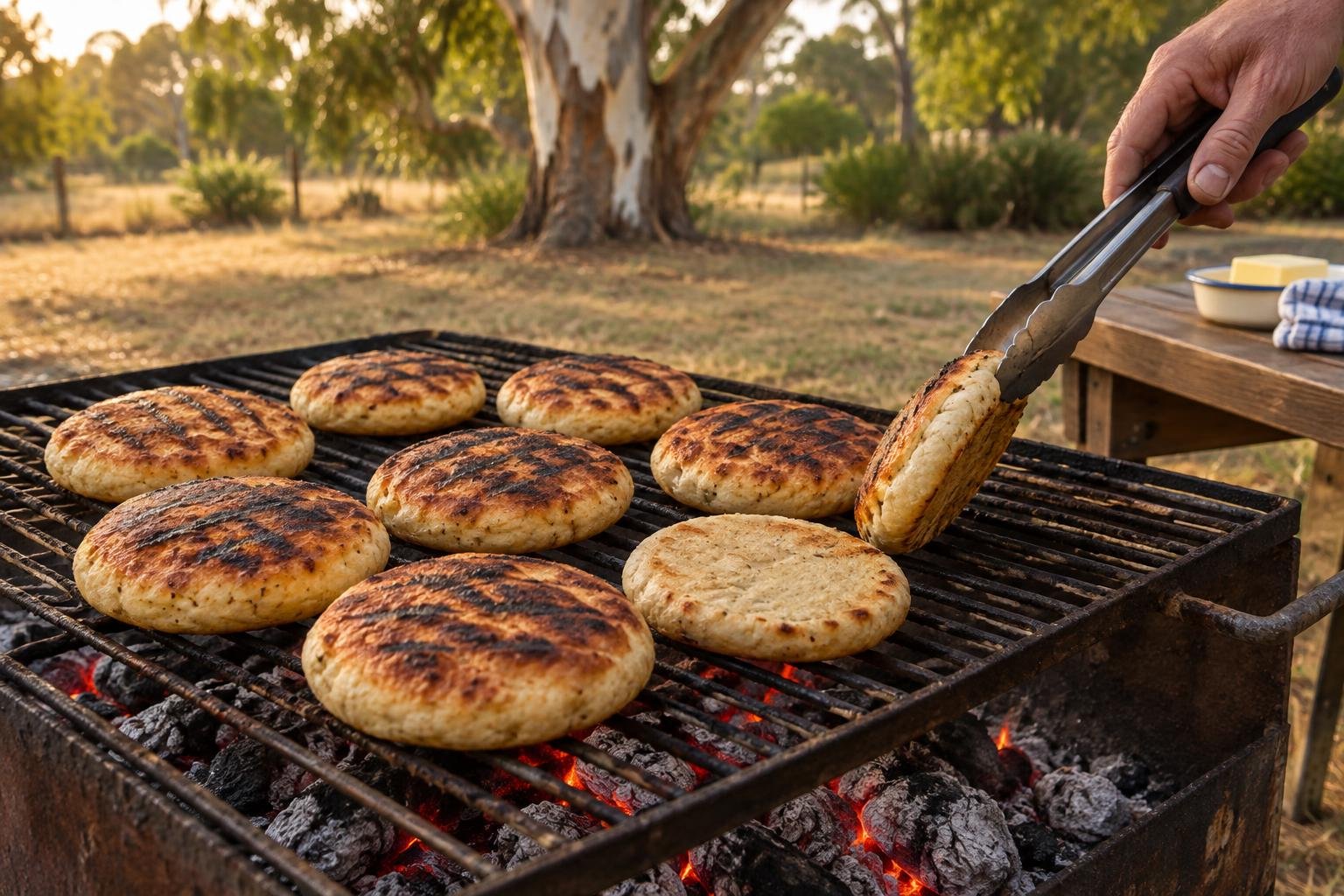
Roosterkoek
Ingredients
Method
- Stir the flour, yeast, sugar and salt together in a large bowl until the salt is spread right through.
- Pour in 300 ml of the lukewarm water and the oil, then work it into a shaggy dough with one hand, adding the last 20 ml only if dry flour is left.
- Knead on a floured bench for 10 minutes, until the dough is smooth and springs back when you press it with a finger.
- Cover the bowl with a tea towel and leave it somewhere warm for 45 to 60 minutes, until it has doubled in size.
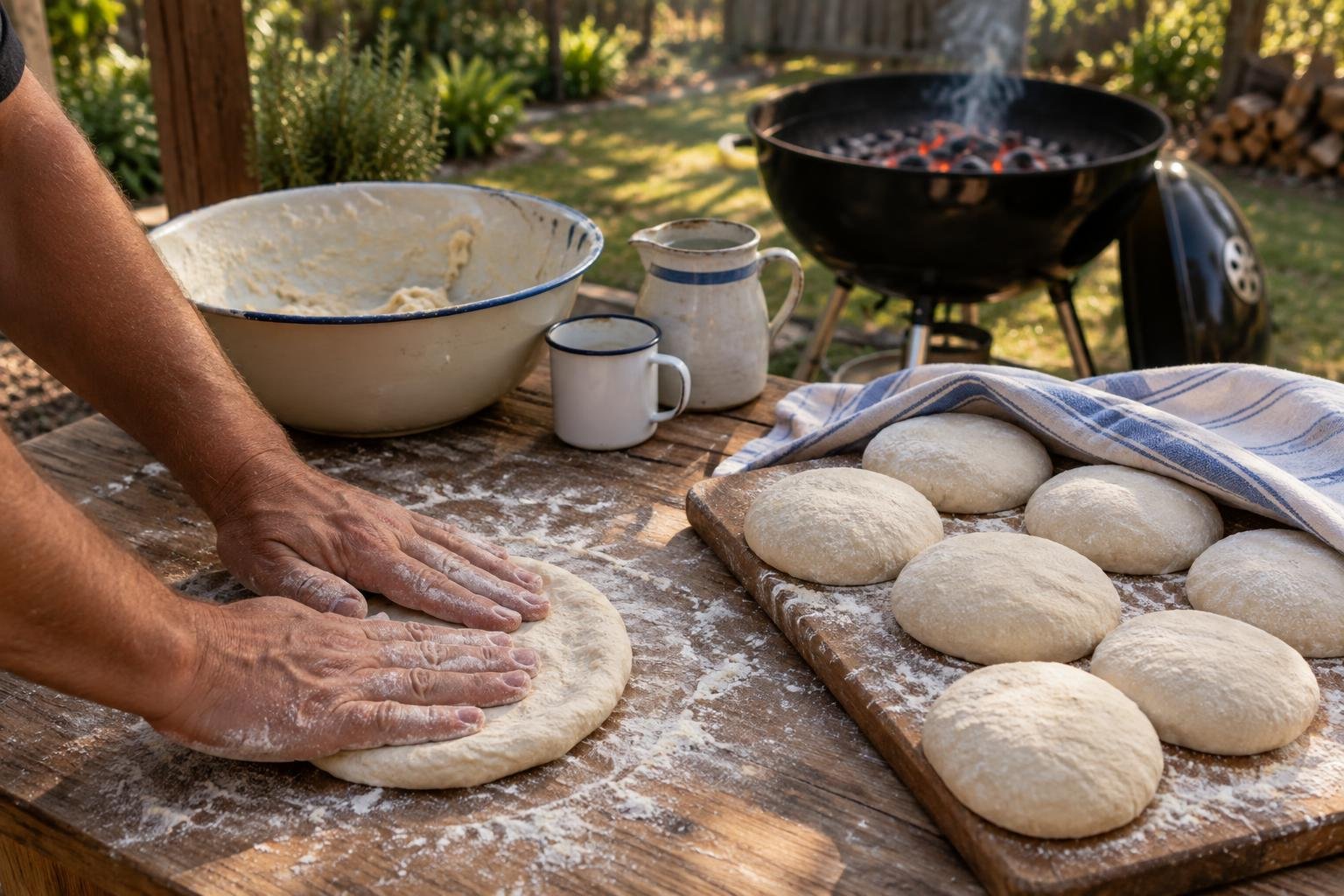
- Knock the dough back, divide it into 8 pieces, roll each into a ball and flatten it to about 2 cm thick.
- Cover the shaped rolls and rest them for 15 minutes while the fire burns down to low, even coals with a grey coat of ash.
- Oil the grid, set it about 15 cm above the coals, and cook the roosterkoek for 15 to 20 minutes, turning every 3 or 4 minutes.
- They are ready when both sides are browned and a roll sounds hollow when you tap it. Split them while hot and butter them.
Notes
What you are after at the end is a roll that is deep golden with dark bar marks, light for its size, and hollow when you knock on the base. Tear one open and the crumb should be white, soft and a bit steamy. If the middle is dense and damp, the fire was too hot and the outside browned before the inside caught up.
They are best straight off the grid. If you need to hold them, pile them in a bowl and put a tea towel over the top, which keeps them soft for half an hour.
Three ways to cook them
The dough does not change. The fire does.
Open grid over coals. The traditional way and still the best. Burn your fire down until the coals are low and coated in grey ash, with no flames at all. Set the grid about 15 cm above them. If you can hold a hand at grid height for four or five seconds, you are close. Turn the rolls every three or four minutes so neither side gets ahead. Every roosterkoek recipe worth following says the same thing here, and it is the part people skip.
Kettle braai with the lid on. A Weber or any kettle gives you an oven, which is useful when the coals are livelier than you would like. Rake the coals to the sides, put the rolls over the empty middle, and close the lid with the vents half open. They will take about twenty minutes and need turning only once. You lose a little of the bar-marked crust and gain a lot of margin for error. Our kettle braai versus Weber comparison goes into which lids and vents actually seal.
Camp oven or potjie. Grease the pot, put the shaped rolls in with a gap between them, and put the lid on. Sit the pot on a thin bed of coals and shovel more coals onto the lid so the heat comes from above too. This is closer to potbrood and gives a softer, paler roll. Keep the base gentle, because a flat cast iron bottom on thick coals burns long before the middle sets. Our potjie pot guide for Australia covers pot sizes and heat control.
One thing to check before you light anything. Solid fuel fires are restricted in most states on high fire danger days, and a total fire ban usually stops charcoal and wood while leaving a gas barbecue legal. Our state by state guide to braai fire rules in Australia has the detail. On a ban day, cook them in a covered gas barbecue on low, or in the oven at 200°C for 15 minutes and finish them briefly on the hotplate for the marks.
Where it goes wrong
Three faults account for nearly every bad batch.
The first is dough falling through the grid. That is too much water, a grid with wide bars, or coals that are not hot enough to set the outside quickly. Stiffer dough is the fix. If your dough sags when you lift it, knead a tablespoon or two more flour through it and let it rest again before shaping.
The second is a burnt crust with a raw middle. That is flame, or coals with no ash coat on them. Roosterkoek wants low heat and patience, which is the opposite of what a fresh fire gives you. Let the fire go further down than feels right, or raise the grid a notch.
The third is a smell of firelighters in the bread. Bread is porous and it picks up everything in the smoke. Light the fire early enough that the firelighters have burnt out completely, and never add fresh charcoal underneath while the rolls are on.
What to eat them with
Roosterkoek belongs beside the meat, in place of a bread roll. Split them hot, put butter on while the steam is still coming out, and use them to chase the juice around the plate. Grated cheddar melted into a split roll is a South African childhood in one bite.
They also carry a meal on their own. Fill them with leftover chops, or with the coil off the grid, and our guide on how to braai boerewors gets that part right. For the rest of the table, our eight braai side dishes from an Australian supermarket gives you the salads that go next to them.
Frequently asked questions
What flour should I use for roosterkoek in Australia?
Plain flour is the closest match to the cake flour a South African recipe means, and it is what we use. Bakers flour or bread flour also works and gives a chewier roll that holds its shape better on the grid, but it absorbs more water, so add about 20 ml more. Do not use self-raising flour.
Can I make roosterkoek dough the day before?
Yes, and it improves the flavour. Mix and knead the dough, then put the covered bowl straight in the fridge overnight. Take it out an hour before the braai, let it come back to room temperature and finish rising, then shape and rest as usual.
How do I know when roosterkoek is cooked through?
Tap the base. A cooked roll sounds hollow and feels light for its size. If you are unsure, push a skewer or a clean knife blade into the middle, which should come out dry. The outside browns long before the middle is done, so colour on its own is not the test.
Can I cook roosterkoek without a fire?
You can. Bake the shaped rolls at 200°C for about 15 minutes, then finish them for a minute a side on a hot barbecue hotplate or a ridged griddle pan for the marks. You lose the smoke, which is most of the point, but on a total fire ban day it is that or nothing.
Why did my roosterkoek fall through the grid?
The dough was too wet, or the coals were too cool to set the outside fast enough. Roosterkoek dough should be firm enough to hold a round shape on the bench without spreading. Oiling the grid and letting it heat for a few minutes before the rolls go on also helps.
Can I freeze them?
Yes. Cool them fully, then freeze them whole in a bag. Reheat from frozen in a covered braai or a 180°C oven for about ten minutes. They come back close to fresh, which cooked bread does not always manage.
Make the dough once at 300 ml of water and once at 320 ml, with the same flour, and you will learn more about your own bag of flour than any recipe can tell you. Write the better number on the bag with a marker, and that is your roosterkoek recipe settled for good.