Heads up: this guide contains affiliate links. Buy through one and we may earn a small commission at no extra cost to you. We only link gear we would stand next to at a braai.
Which size to buy, how it differs from a camp oven, where to actually find one in Australia, and how to look after it once it is yours. Nobody had written this guide. Now somebody has.
By The Braaimate. Updated July 2026.
A potjie is a slow pot for a slow afternoon. It is the cast-iron, three-legged pot you stand in the coals and leave alone for hours while the meat and vegetables turn into something you will think about for days. Buying one in Australia is not hard, but there are two traps: getting the size wrong, and buying something that is not actually a potjie at all. Let us deal with both.
Table of Contents
First, a potjie is not a camp oven
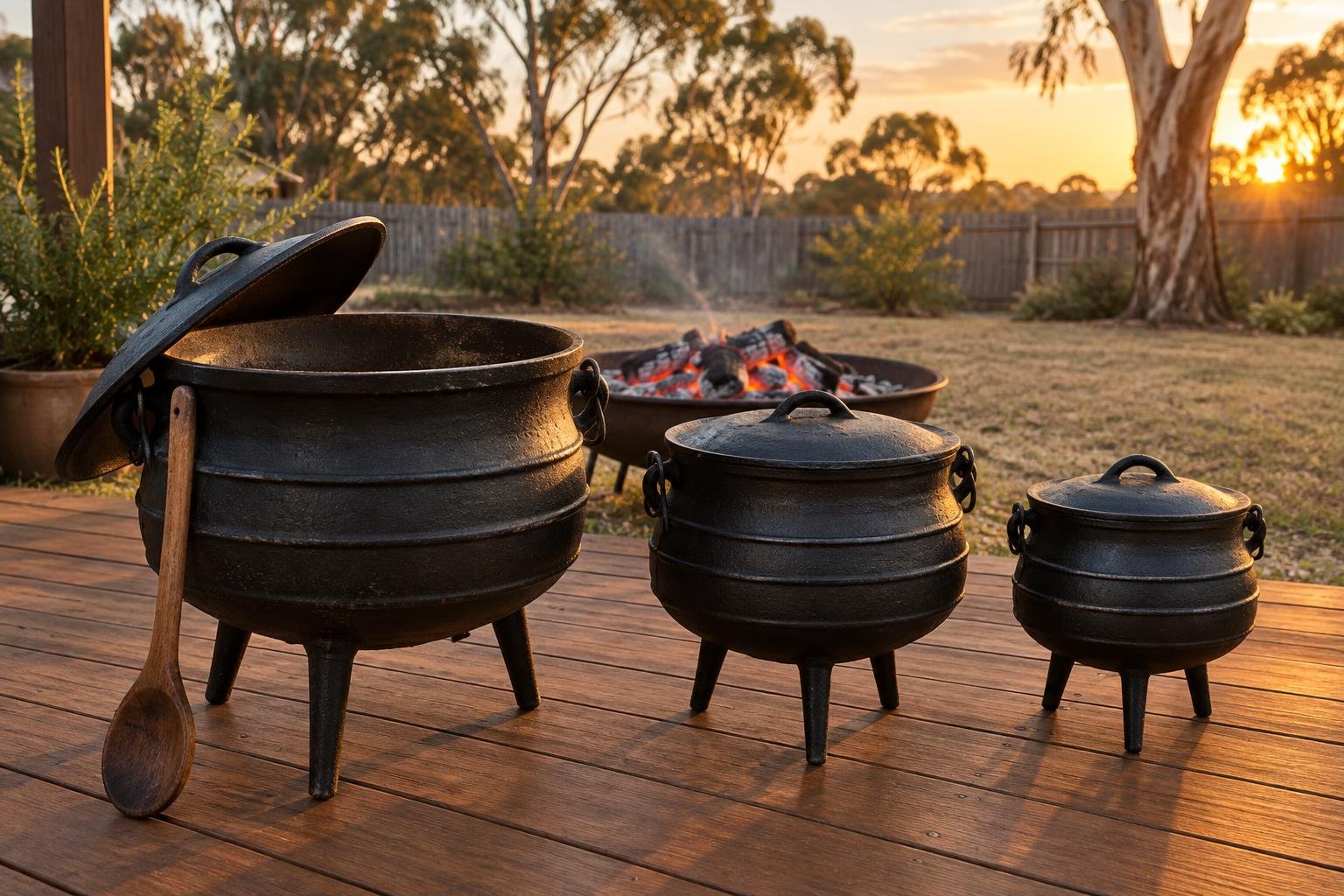
This is the mistake that costs people the most money. A true potjie has three legs and a round belly, so it sits up in the coals with a fire underneath and heat rising around it. A camp oven, sometimes sold as a Dutch oven or a Bedourie, has a flat bottom and no legs. Both are cast iron, both are excellent, and they are not the same animal. If you follow a potjiekos recipe in a flat-bottomed camp oven, it will still be dinner, but it will cook differently. When you are shopping, look at the base. Three legs and a round belly, or keep looking.
What the size numbers actually mean
Potjies are sold by number, and here is the thing nobody tells you: the number is not the litres, and it is not perfectly consistent between brands. That is exactly why people order the wrong one. Always check the litre capacity printed on the pot rather than trusting the number alone.
As a rough guide: a size 1 is a small pot for two to four people, a size 2 suits a family of four to six, a size 3 is the popular all-rounder that feeds roughly eight, and a size 4 and up moves into crowd and community-hall territory. One rule holds across every brand, so remember this above all: a potjie must be at least two-thirds full to cook properly. Buy bigger than you usually feed and your food will scorch and dry out in a half-empty pot.
So what size should you buy?
For most families, the size 3 is the answer. It is big enough for a proper potjiekos for a table of six to eight, and small enough to season, store and lift without doing your back in. If you are cooking mostly for two, a size 1 or 2 will serve you better and waste less. Only go bigger than a 3 if you genuinely and regularly cook for a crowd. A giant potjie that is always half full is a giant mistake. When in doubt, buy for the meals you actually cook, not the dinner party you imagine hosting.
Where to find one in Australia
Cast-iron three-legged potjies are not on every corner here, so plan ahead rather than expecting to grab one on the way to a braai. Three routes tend to work. First, the South African online shops that ship within Australia, which carry the genuine three-legged article and are usually your safest bet. Second, specialist cast-iron and outdoor cookware sellers. Third, the big camping and hardware retailers, though this is where you must read carefully, because most of what they stock is flat-bottomed camp ovens rather than true potjies. Check the base, check the legs, and do not let a lovely camp oven talk you into thinking it is something it is not.
Our pick
OZtrail 8L cast iron potjie pot
The real three-legged article: built-in cast iron legs and a heavy base for even heat over coals. At 8 litres it sits in the family all-rounder territory from the sizing section above, and at 9.8 kg it is proper cast iron, not a souvenir.
Seasoning a new potjie
A new cast-iron potjie arrives with a protective coating that you must remove and replace with your own seasoning before the first cook. Wash it in hot soapy water this one time only, dry it completely, then rub a thin layer of neutral oil over every surface, inside and out. Heat it gently over coals or in the oven until it stops smoking, let it cool, and repeat two or three times. The pot will darken with each pass. That is the point. That dark patina is what stops food sticking and keeps the iron from rusting.
For the cast iron
OZtrail cast iron seasoning oil
An all-natural seasoning oil made from coconut oil and essential oils. It protects the cast iron, helps stop food sticking, and keeps odours down between potjies. Easier than keeping a bottle of flaxseed oil for one job.
Looking after it
After that first seasoning, keep soap well away. Clean a used potjie with hot water and a stiff brush, then dry it thoroughly over the last of the coals or on a low hob, because any moisture left behind is an invitation to rust. Wipe a little oil around the inside while it is still warm, and store it with the lid propped slightly open so air can move through. Left sealed, it can go musty. Treated properly, a cast-iron potjie will outlast the person who bought it, which is rather the point of buying one.
Get the size right for the people you actually feed, season it with patience, and it becomes the pot your grandchildren argue over. For what to cook in it first and how to track down the harder South African ingredients here, start with our substitutes guide, and if you are still settling the great outdoor-cooking debate, our braai versus bbq piece is where that gets sorted.
Frequently Asked Questions
What size potjie pot should I buy?
For most families the size 3 is the sweet spot: it feeds six to eight and is still light enough to season, store and lift. Cooking mostly for two? A size 1 or 2 wastes less. And remember the golden rule: a potjie must be at least two-thirds full to cook properly.
Is a potjie the same as a camp oven?
No. A true potjie has three legs and a round belly, so it sits up in the coals with heat rising around it. A camp oven, Dutch oven or Bedourie has a flat bottom and no legs. Both are excellent cast iron, but they are not the same animal and they cook differently.
Do potjie size numbers mean litres?
No, and that is exactly how people order the wrong pot. The size number is traditional, not a capacity, and it is not consistent between brands. Always check the litre capacity printed on the pot before you buy.