Australians are magnificent at many things. Calling a braai a barbie is not one of them. Here is the difference, explained with love, by someone who now owns both.
By The Braaimate. Updated July 2026.
Roughly 224,000 South African-born people live in Australia, according to Department of Home Affairs figures for June 2024. Most of us have had this conversation at least once a summer. A colleague hears you are having a braai and says, kindly, “a barbie.” You smile. You do not correct them. But something inside you quietly sits down and puts its head in its hands.
Table of Contents
A braai is fire. A bbq is heat.
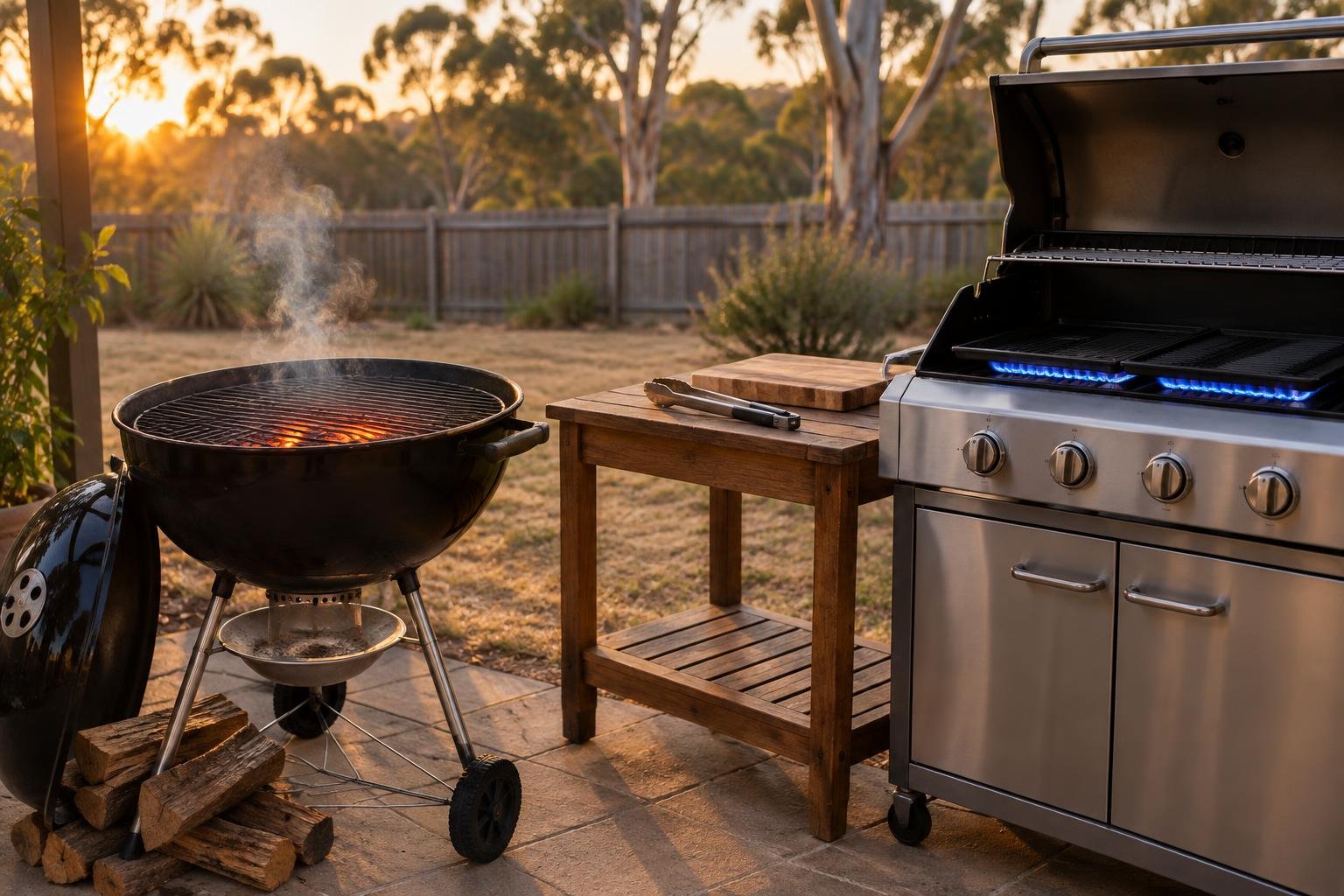
The Australian barbecue is, most of the time, a gas appliance. Turn a knob, get a flame, cook a snag, done in twenty minutes. It is efficient, and efficiency is precisely the problem. A braai starts with wood or charcoal, and the fire is not a means to an end. It is the end. You light it early. You watch it burn down to coals with the seriousness of a man defusing a bomb. Nobody rushes a fire, and nobody worth knowing tries.
This is the first thing to understand. Gas is cooking. Coals are a ceremony.
The braai is a place, not a task
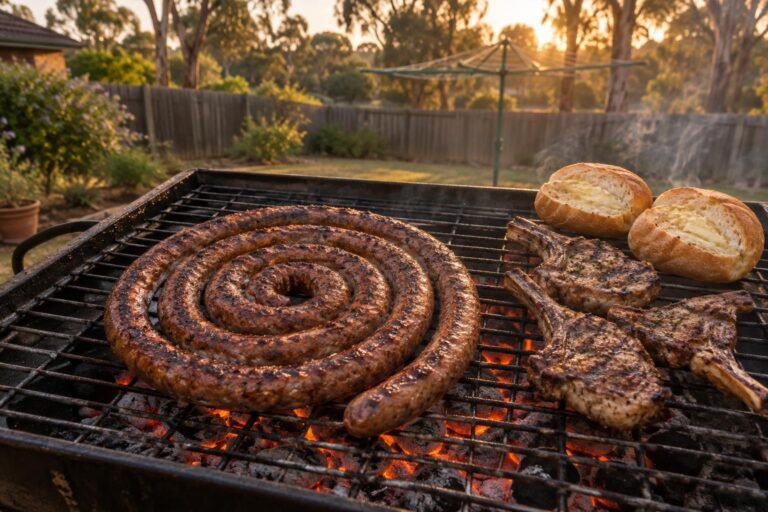
Ask an Australian where the barbie is and they point at the appliance. Ask a South African where the braai is and they point at the whole afternoon. The braai is the fire, the people around it, the second beer while the coals settle, the argument about whether the wors is ready (it is not, sit down). It has no set finish time. A barbecue ends when the food is cooked. A braai ends when the last person leaves, and sometimes not even then.
The boerewors question
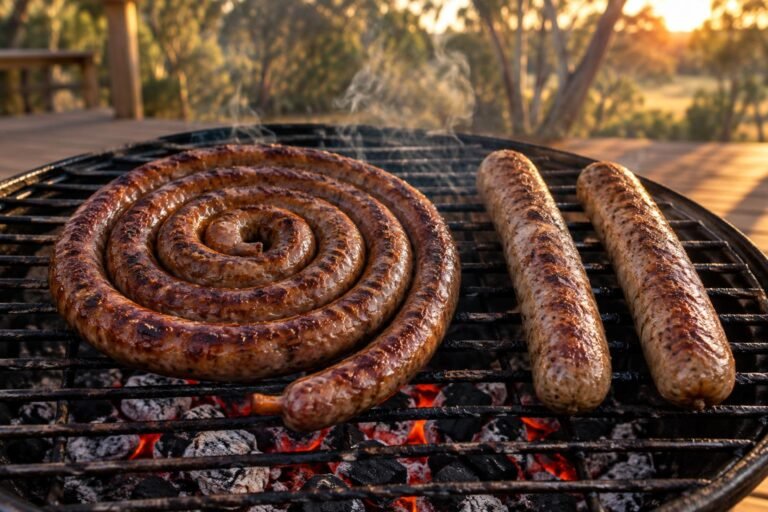
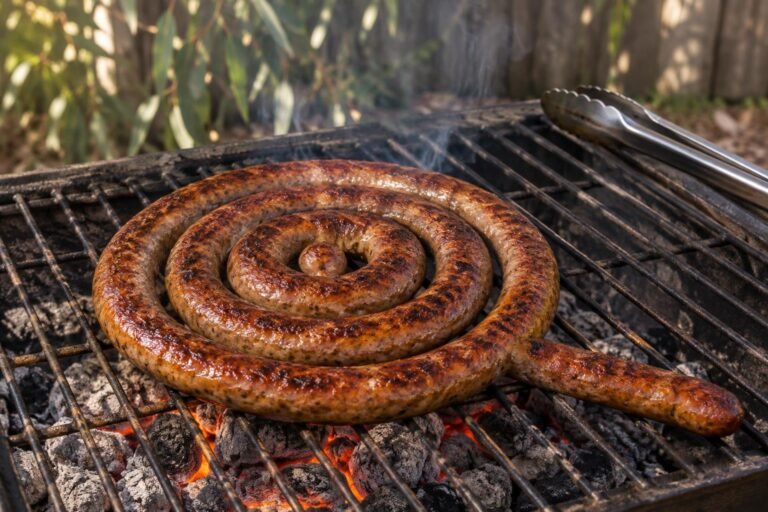
You cannot discuss a braai without boerewors, the coiled sausage that anchors the whole event. Getting it right in Australia takes a little effort. The good butchers here will make a proper coarse-ground wors if you ask, and the South African shops carry the real thing. Do not, under any circumstances, accept a thin supermarket snag as a substitute and call it the same meal. It is a fine sausage. It is not wors.
And then there is the braaibroodjie, the toasted sandwich that quietly outranks the meat. If you have never made one over dying coals, start there. We wrote the whole method, Australian ingredients included, in our braaibroodjies recipe.
What the Australians get gloriously right
None of this is a complaint, and here is where the homesickness softens. Australians understand the important part perfectly: that cooking outdoors is really about gathering people, feeding them generously, and staying out until the light goes. The snag in white bread with onions and sauce is a genuinely great thing. The welcome at an Aussie barbecue is as warm as any braai I grew up with. The word is different. The heart is the same.
But South Africans use gas too, be honest
A fair objection. Plenty of South African homes keep a gas braai on the patio for a weeknight, and there is no shame in it. The point was never that gas is wrong. It is that the default, the thing we mean when we say the word, is fire. In Australia the default is gas, and the fire is the exception. Swap the defaults and you have swapped the culture. That is the whole difference in one sentence.
The ingredient problem, and the fix
The harder part of braaing here is not the fire. It is the shopping. Half the flavours you grew up with hide under different names on Australian shelves, or vanish entirely. Maizena, Mrs Balls, the right cut for wors. We keep a running list of what to buy instead, from Tennis biscuits to Nik Naks, in our South African ingredient substitutes guide.
So what do you call it?
Here is the ruling, from an expat who now owns both a gas barbie and a proper braai and uses each without shame. Call it a barbecue when there is gas involved and you are cooking on a Tuesday. Call it a braai when there is a real fire, no clock, and at least one conversation that goes nowhere for an hour. The difference is not the equipment. It is the intention. One feeds you. The other keeps you.
So the next time someone calls your braai a barbie, you have two choices. Correct them gently, or hand them a plate, pour them a drink, and let the fire make the argument for you. We recommend the plate.