Heads up: this guide contains affiliate links, including Amazon links. As an Amazon Associate, Braai Mate earns from qualifying purchases. Buying through our links costs you nothing extra.
Somewhere in your first month in Australia, a recipe asks for something you cannot find. Maybe it is maize meal for pap. Maybe it is Tennis biscuits for a fridge tart. You stand in the Woolworths aisle, phone in hand, typing a question into a search engine that answers with forum threads from 2011. This guide exists so you never have to do that again. It covers the South African ingredient substitutes in Australia that actually work, sorted by how you cook, with what we have found on real supermarket shelves. Some of the news is better than you think. Some of it involves a warning about cornflour. Let us start with the happy surprises.
Table of Contents
Check the shelf before you substitute
The first rule of substituting in Australia: make sure you actually need to. A surprising number of South African staples are sitting in the big supermarkets right now, no specialty shop required.
Mrs Ball’s chutney is the big one. Both Coles and Woolworths stock the Original recipe, and Woolworths carries the Hot and Peach varieties as well (checked July 2026). It usually lives near the other chutneys and relishes, not in a special international section, so scan the whole shelf before you give up. If your local store does not carry it, ask them to order it in, or see the last section of this guide.
The pantry lifeline
Mrs Ball’s Original Recipe Chutney, 470 g
Check your local Coles or Woolworths shelf first, because both stock the Original. If your store keeps letting you down, Amazon AU delivers the 470 g bottle to your door, with the Hot and Peach varieties a click away.
Peppermint Crisp is even better news. Nestlé makes it in Australia, at their factory in Campbellfield in Victoria, and it sells in the regular confectionery aisle. Your peppermint crisp tart is safe on this side of the Indian Ocean. Nobody needs to smuggle chocolate through customs, which we are told is frowned upon anyway.
Aromat, the yellow tin of seasoning that finds its way onto every braai plate, is stocked by both Coles and Woolworths in the 200g canister. And Marie biscuits, the plain round base of a thousand South African bakes, exist here as Arnott’s Marie, sold at Woolworths, Coles and IGA. They dunk, crumble and crust just like the ones you grew up with.
Baking substitutes that actually work
Baking is where substitution gets technical, because flour and biscuits behave differently when the brand changes. Here is what works.
Tennis biscuits
Tennis biscuits are square coconut biscuits, and they are the backbone of fridge tarts across South Africa. The substitute that works is Arnott’s Nice biscuits. They have the same coconut flavour and a similar crisp texture, and Australian bakers already use them in layered fridge desserts. If a recipe calls for a Tennis biscuit base, swap gram for gram and carry on.
Caramel Treat
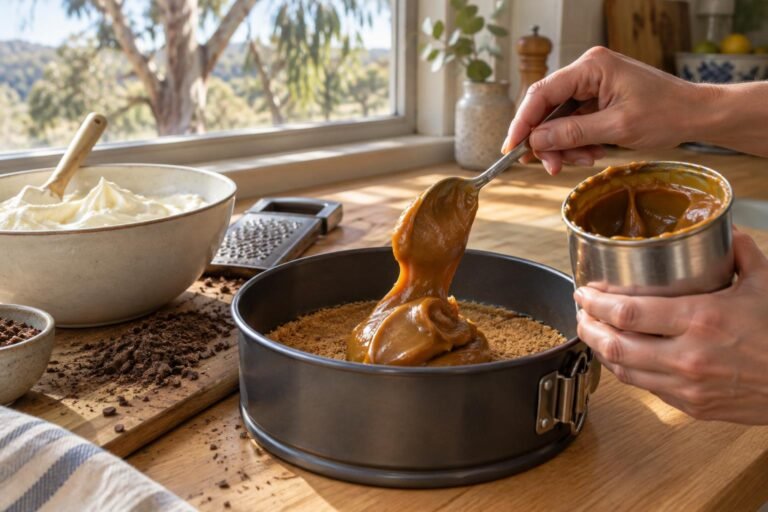
Caramel Treat, the tin of ready-made caramel, has a near-perfect Australian twin: Nestlé Top ‘n’ Fill Caramel. It sits in the condensed milk section of any major supermarket, it is thick enough to hold a layer, and it goes straight from tin to tart. For peppermint crisp tart, that means every ingredient is now solved: Nice biscuits, Top ‘n’ Fill, cream and a locally made Peppermint Crisp.
Cake flour
South African cake flour is a soft, fine wheat flour. Australian plain flour is close but not identical. The common fix is to replace a small portion of the plain flour with maize cornflour, which softens the blend and gets you near the fine crumb of home. It works well for most bakes, though fussy recipes like sponge cakes may need a test run before the big occasion. Which brings us to the warning.
The cornflour trap
Read the label before you buy cornflour in Australia. Here, “cornflour” can be made from wheat. It is sold as wheaten cornflour, it is common because Australia grows a lot of wheat, and it is not the same thing as Maizena. If a South African recipe calls for Maizena, you want maize cornflour, which says maize on the packet and is gluten free. The two thicken similarly, so a sauce will survive the mix-up, but anyone cooking gluten free needs to be careful, and purists will notice the difference in delicate bakes.
Buttermilk
Not a South African ingredient as such, but every rusk recipe needs it. Australian supermarkets do stock buttermilk, and when they are out, the old trick works: a tablespoon of lemon juice or vinegar stirred into a cup of milk, left for ten minutes.
Braai day substitutes
The braai (the South African barbecue, cooked over real wood or charcoal rather than gas) has its own shopping list, and this is where Australia asks you to work a little harder.
For the braai plate
Knorr Aromat Original Seasoning, 200 g
The yellow canister that finds its way onto every braai plate. Both big supermarkets carry it, and Amazon AU has the 200 g canister plus bulk refills if your household goes through it at expat speed.
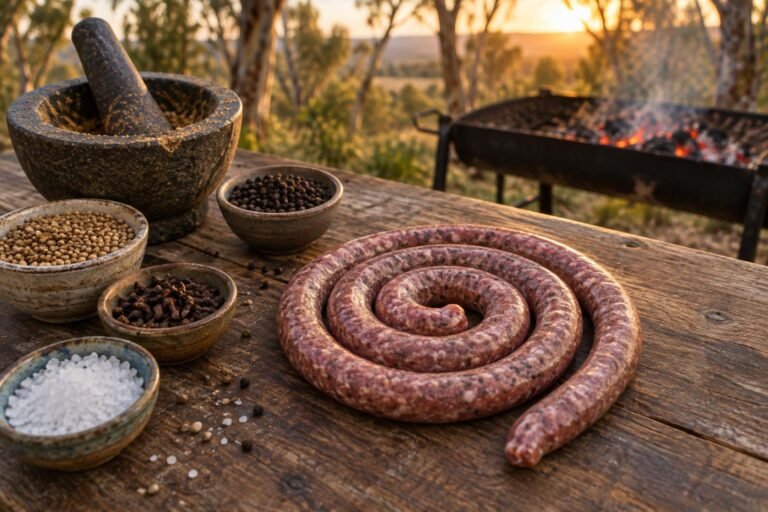
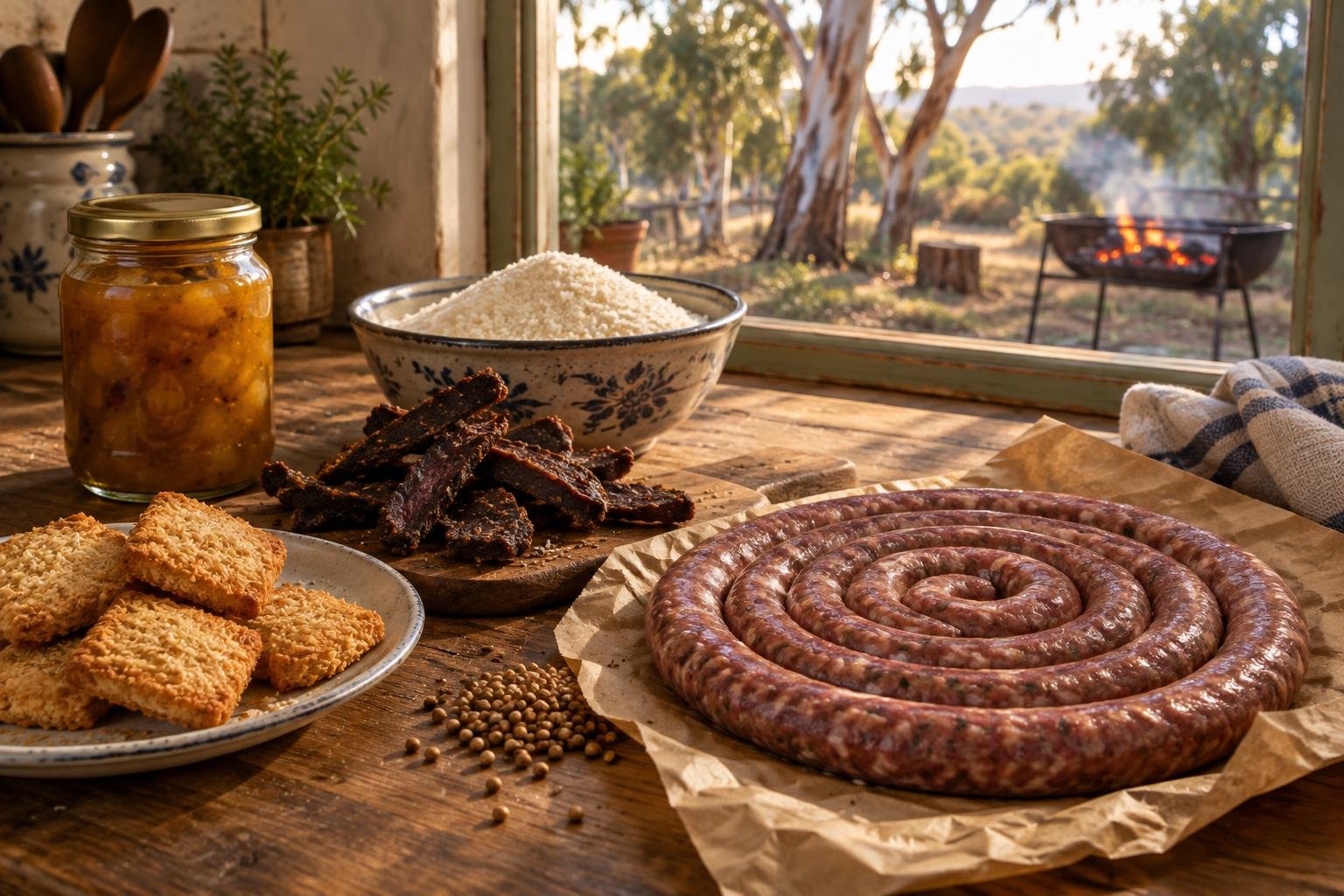
Boerewors, the coiled coriander-spiced farmer’s sausage, has no supermarket substitute worth your time. An Australian thick sausage is a fine sausage, but it is not wors, and the flavour difference is the whole point. The good news is that South African butchers and shops across Australia make and sell proper boerewors. Our state-by-state directory of South African shops lists where to find them.
Maize meal for pap (the firm maize porridge served alongside the meat) is easier than it used to be. South African brands turn up in some supermarket international aisles, and every South African shop stocks them. If you are caught short, white polenta or fine white cornmeal from the continental section makes a workable pap, close enough in flavour, slightly different in texture. Yellow polenta will feed everyone happily but will not look like the pap you remember.
Braaibroodjies (buttered toasted sandwiches cooked over the coals) need no substitutes at all, just the right technique and a few smart Australian ingredient choices. We have a full braaibroodjies recipe using Australian ingredients that settles the cheese question properly.
Snacks, treats and the ones with no shortcut
Biltong has no substitute, and we will not insult you by suggesting jerky. Jerky is thin, sweet and cooked in a marinade; biltong is air-dried, vinegar-cured and spiced with coriander. They are cousins at best, and not the kind who visit. Buy real biltong from a South African shop or butcher, or make your own, which is easier in the Australian climate than most people expect. A full guide to making biltong at home is coming to this site soon.
Ouma rusks, the buttermilk dunking rusks, are sold at most South African shops in Australia at import prices. The cheaper route is baking your own buttermilk rusks, which is a weekend job with a big payoff, and one trick some bakers swear by for that authentic flavour is toasting milk powder in a dry pan until it turns caramel-coloured before adding it to the dough.
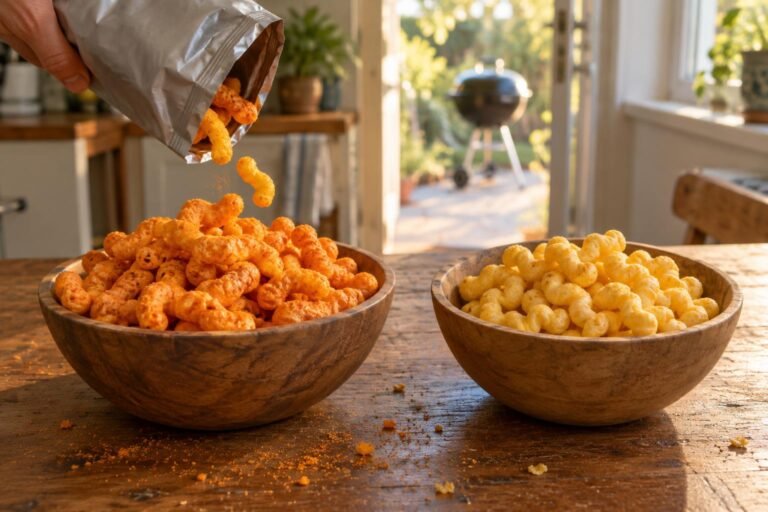
Nik Naks, the maize cheese puffs, are the hardest snack to replace honestly. Australian cheese snacks scratch the same itch without quite landing the same flavour, and expat shops import the real thing for a reason. We are testing the local options properly and will report back in a dedicated post.
When only the real thing will do
Some things cannot be substituted, only sourced. For biltong, boerewors, Ouma rusks, Safari dried fruit, the proper Simba chips and everything else that tastes like home, the answer is a South African shop, and Australia has more of them than you might think. Our directory of South African shops in Australia covers every state, including which shops deliver, so wherever you have landed, home is a parcel away.
And for everything that can be swapped, keep an eye on our substitutions hub, where we test one ingredient at a time in a real Australian kitchen and report what actually works, not what a forum thread from 2011 guessed might.
Frequently Asked Questions
What is the best substitute for Mrs Ball’s chutney in Australia?
You probably do not need one. Coles and Woolworths both stock Mrs Ball’s Original, and Woolworths carries Hot and Peach too. If your local store fails you, a South African shop will have it, and we are testing the closest supermarket alternatives for a dedicated post.
Can I use polenta instead of maize meal for pap?
Yes, with expectations managed. White polenta or fine white cornmeal gets you a workable pap with a slightly different texture. Yellow polenta tastes fine but looks wrong. For the real thing, South African maize meal brands are sold at SA shops and some supermarket international aisles.
What are Tennis biscuits called in Australia?
Nothing, because they do not exist here under any name. The working substitute is Arnott’s Nice, a coconut biscuit with a similar flavour and crunch that holds up in fridge tarts. South African shops import real Tennis biscuits if the swap will not do.
Is Australian cornflour the same as Maizena?
Only sometimes, and that is the trap. Australian cornflour is often made from wheat and labelled wheaten cornflour. Maizena is maize starch, so buy the packet that says maize cornflour, especially if anyone at the table eats gluten free.
Where do I find South African ingredient substitutes in Australia?
Start at the big supermarkets, because more South African products are stocked there than most expats realise. For the rest, use tested swaps like the ones in this guide, and lean on South African shops for the items that h