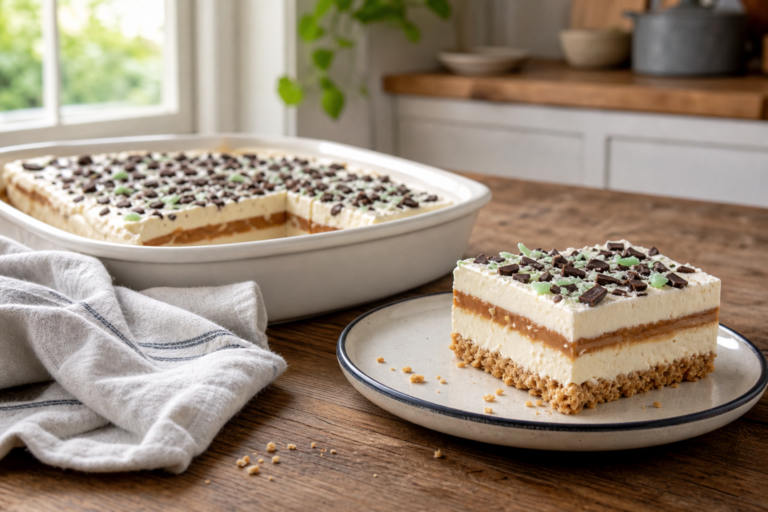

You are halfway through your ouma’s melktert, the recipe says two tablespoons of Maizena, and you are standing in the baking aisle at Coles holding a box that says cornflour. So here is the maizena vs cornflour answer up front: yes, it is the same thing, and no, you do not need to hunt down a South African shop for it. There is exactly one catch, it is printed on the packet, and it takes ten seconds to check.
That catch has ruined more than one Australian batch of custard for someone cooking gluten free, so it is worth understanding properly rather than just grabbing the cheapest box.
Table of Contents
- Maizena vs cornflour: the short answer
- What Maizena actually is
- What “cornflour” means in Australia
- The one catch: wheaten cornflour
- How to read the packet in ten seconds
- Swapping Maizena for Australian cornflour in your recipes
- The other trap: American corn flour
- And mieliemeel is not cornflour either
- Where to buy it in Australia
- Quick answers
Maizena vs cornflour: the short answer
Maizena is a South African brand name for corn starch. Cornflour is what Australians and New Zealanders call the same white powder. Same ingredient, same job, same measurements, no conversion needed.
The catch is that in Australia the word “cornflour” is also used on packets of wheat starch, sold as wheaten cornflour. That version contains gluten. If gluten does not matter in your kitchen, it will still thicken your sauce and you can stop reading at the swap section below. If it does matter, read the label section first.
What Maizena actually is
Maizena is corn starch, the pure white starch extracted from maize kernels with the protein, oil and fibre stripped out. That is why it is bright white, why it squeaks a little between your fingers, and why it thickens so hard for so little powder. In South Africa it comes in a 500g box and is the default thickener for everything from melktert to gravy. Woolworths South Africa still lists the 500g box as Maizena Cornflour, which tells you everything about how tangled the naming is.
Because it is pure maize starch, plain Maizena has no wheat in it and never has. That is the part South Africans take for granted, and it is exactly the assumption that trips people up here.
What “cornflour” means in Australia
Walk into any Australian supermarket and the baking shelf will have a box labelled cornflour. Most of the big brands are the maize kind, and their own product pages say so.
White Wings Cornflour, a 300g box, is described by Goodman Fielder as made from 100% pure corn, its ingredient list reads simply “Maize Cornflour”, and it carries a gluten free mark. McKenzie’s Corn Flour is a 330g box, also gluten free, with an ingredient list of “Maize corn flour, processing aid (sulphites)”. Note that second one: McKenzie’s declares sulphites, which your box of Maizena at home does not. It will not change how the starch behaves, but if sulphites are a problem for anyone at your table, that is a genuine difference worth knowing.
Both of those are, for cooking purposes, Maizena in an Australian box.
The one catch: wheaten cornflour
Here is where maizena vs cornflour stops being a simple translation. Australia also sells wheaten cornflour. It is wheat starch, not maize starch, and it is sold under the word “cornflour” because that describes what it does rather than what it is made from. You will find it in bulk food stores, in catering packs, and occasionally on a supermarket shelf sitting right next to the maize version.
Wheaten cornflour will thicken your sauce perfectly well. It is slightly less fine than the maize kind and some cooks reckon it dissolves a touch less cleanly, but you would struggle to pick it in a gravy. What it absolutely will do is put gluten in a dish that a South African recipe assumes is gluten free. If you are cooking for someone with coeliac disease, or you have quietly assumed for thirty years that a cornflour-thickened sauce is safe, this is the thing to know.
How to read the packet in ten seconds
You do not need to guess. Australian labelling law does the work for you.
Under the allergen labelling rules from Food Standards Australia New Zealand, which took full effect on 25 February 2024, wheat has to be declared in the ingredient list using that exact word, in bold. On top of that, a bolded summary statement beginning with the word “Contains” must sit near the ingredient list, and if a gluten-containing cereal such as wheat is present, that statement has to include the word “gluten”.
So the ten second check goes like this.
One, turn the box over. Everything you need is on the back, not the front.
Two, read the ingredient list. If it says maize, corn or maize starch, you are holding Maizena in a different frock.
Three, find the bolded “Contains” line. If it mentions wheat or gluten, that is the wheaten version. Put it back on the shelf.
A box that says nothing about wheat is not hiding it. The law does not allow that.
Swapping Maizena for Australian cornflour in your recipes
Assuming you have the maize kind, there is no conversion at all. One tablespoon of Maizena is one tablespoon of Australian cornflour. Your melktert, your custard and your peppermint crisp tart will behave exactly as they did at home.
A few practical notes for the swap:
Always make a slurry. McKenzie’s own instruction is to combine one part corn flour with two parts cold liquid, mix until smooth, then add that to the hot pan. Tip dry starch straight into a simmering sauce and you get lumps you will never whisk out. This is the same rule your mother taught you, it just bears repeating.
Do not boil it for ages. Corn starch reaches its thickest point shortly after it comes to the boil and then starts to thin out again if you keep it bubbling. Thicken, then get it off the heat.
Half the amount of flour. If a recipe calls for plain flour as the thickener and you want to use cornflour instead, the usual kitchen rule of thumb is about half as much cornflour. That is a starting point rather than a law, so add it in stages and look at the pan.
Watch it in the potjie. If you thicken the gravy in a potjie, a cast iron three-legged pot used for slow stews over coals, add the slurry near the end and stir gently. A potjie is not meant to be stirred much, and a cornflour gravy that sits on the coals too long goes thin and slightly gluey.
The other trap: American corn flour
There is a second naming muddle waiting for you, and it comes from recipe websites rather than the supermarket.
In the United States, corn starch means what Australians call cornflour. But “corn flour” over there usually means finely ground whole maize, a pale yellow flour used for cornbread and coating things, which is a completely different product. If you follow an American recipe that calls for corn flour and reach for the white Australian box, you will not get the result the writer had in mind.
The short version: American cornstarch equals Australian cornflour equals Maizena. American corn flour equals something else entirely.
And mieliemeel is not cornflour either
While we are here, mieliemeel, the coarse white maize meal you make pap from, is also not cornflour. It is ground maize, not extracted starch. You cannot thicken a sauce with it and you cannot make pap with Maizena. Australian supermarkets sell polenta, which is the nearest thing on a mainstream shelf, though it is a different grind and a different flavour. For proper mieliemeel you are back to the South African shops, which is a whole other conversation.
Where to buy it in Australia
The honest answer is that you probably should not bother buying Maizena here. The imported box costs several times what a local box of maize cornflour costs, and the contents are the same starch doing the same job. Buy White Wings or McKenzie’s from Coles, Woolworths or IGA, check the label once, and put the money towards something you genuinely cannot get here.
If you want the box for nostalgia, or your recipe card is so worn that only the yellow packet feels right, the South African importers stock it. Our directory of South African shops in Australia lists who carries what, state by state.
Quick answers
Is Maizena the same as cornflour? Yes, when the cornflour is made from maize. Maizena is a South African brand of corn starch and Australian maize cornflour is the same product under a different name.
Is Australian cornflour gluten free? The maize kind is. Wheaten cornflour is not, because it is wheat starch. Check the bolded “Contains” line on the packet.
Do I need to change the quantities in my South African recipes? No. It is a straight one for one swap by volume or by weight.
What is the difference between cornflour and corn starch? None, in Australian terms. Corn starch is the American and South African name for the same white powder Australians call cornflour.
Can I use cornflour instead of plain flour to thicken? Yes, using roughly half as much as a starting point, added as a slurry with cold liquid rather than dry.
For the rest of the pantry translations, from Mrs Balls to caramel to tennis biscuits, our guide to South African ingredient substitutes in Australia covers the lot in one place.
Now go and finish that melktert.