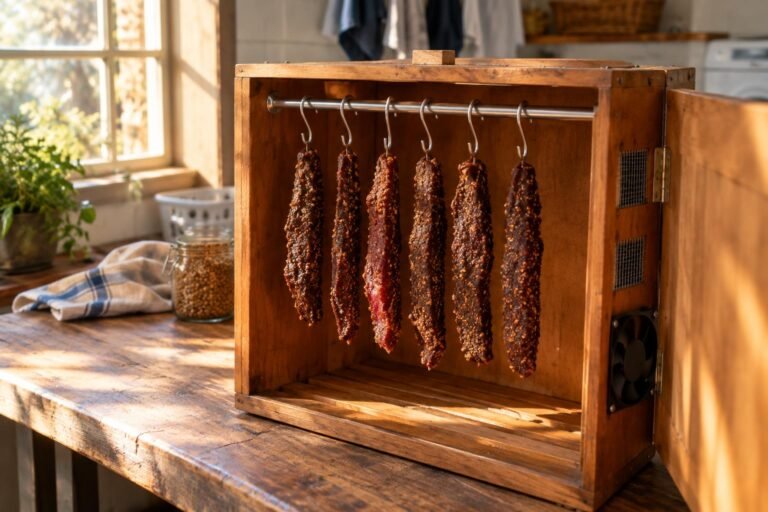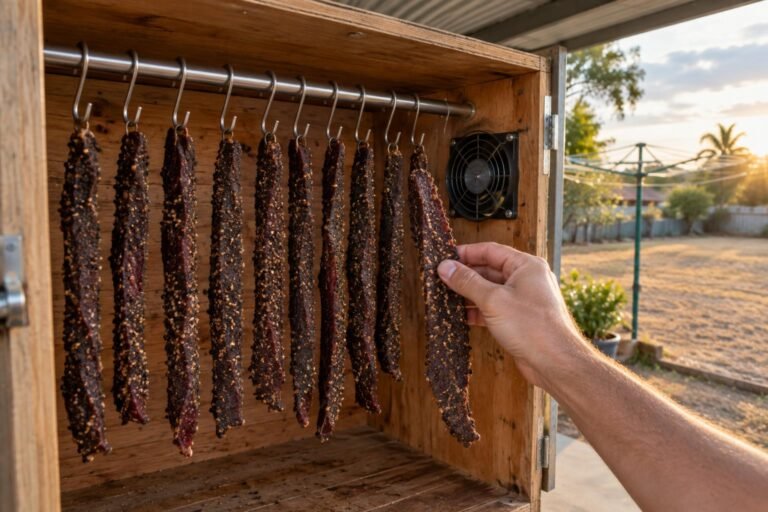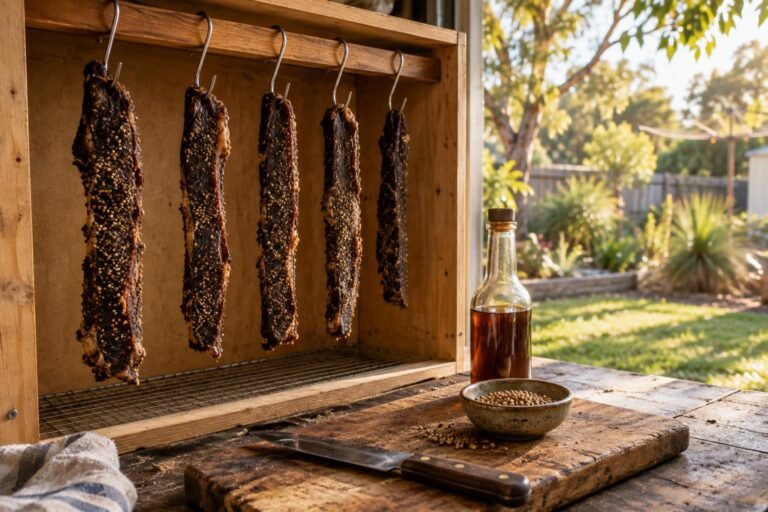
A good biltong spice recipe is shorter than you expect: coarse salt, whole coriander seed, black pepper, a little brown sugar and a splash of brown vinegar. The magic is in the ratio and the grind, not in a secret ingredient. Get those two right and plain Australian topside turns into something your South African uncle would nod at.
Below is our working biltong spice recipe, scaled per kilogram of beef so you can make as much or as little as you like. The quantities are our own version, built from common South African home methods, and not a family heirloom. Treat it as a starting point and adjust the salt to your own taste.
Table of Contents
The biltong spice recipe, in ratios
Weigh the beef before you do anything else, because everything is measured against it. For each kilogram of beef, our mix looks like this.
- Coarse salt: 20 g, which is 2 per cent of the meat weight.
- Whole coriander seed: 15 g, toasted and cracked.
- Black pepper: 3 g, coarsely ground.
- Brown sugar: 1 teaspoon, optional, to round off the edges.
- Brown vinegar: 60 to 100 ml, splashed over the meat.
Home recipes vary quite a bit. One Australian retailer’s basic recipe works out at about a tablespoon each of coriander and vinegar per kilo, with salt a little higher than ours. A South African recipe scaled down from a 25 kg commercial batch lands closer to 6 g of coriander per kilo. So there is no single correct number. Our figures sit in the middle and match the cure in our guide to making biltong at home in Australia.
The recipe card below makes enough mix for 2 kg of beef, which is a sensible first batch.
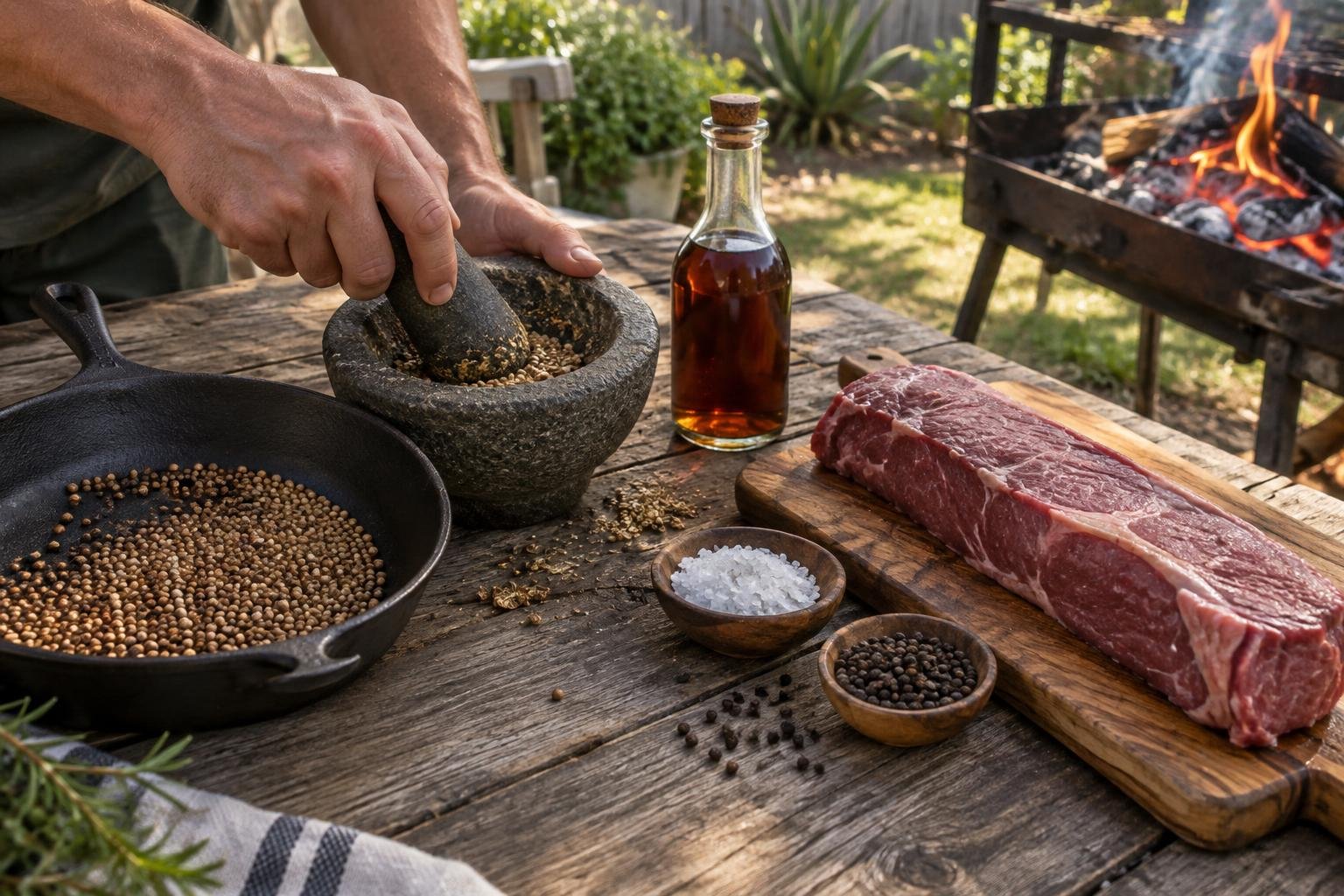
Biltong spice mix and cure
Ingredients
Method
- Toast the coriander seeds in a dry pan over medium heat for 1 to 2 minutes, until they smell warm and citrusy.
- Crack the toasted seeds with a mortar and pestle until they are the size of coarse sand, leaving a few larger bits in.
- Coarsely grind the peppercorns, then mix them in a bowl with the salt, coriander and sugar.
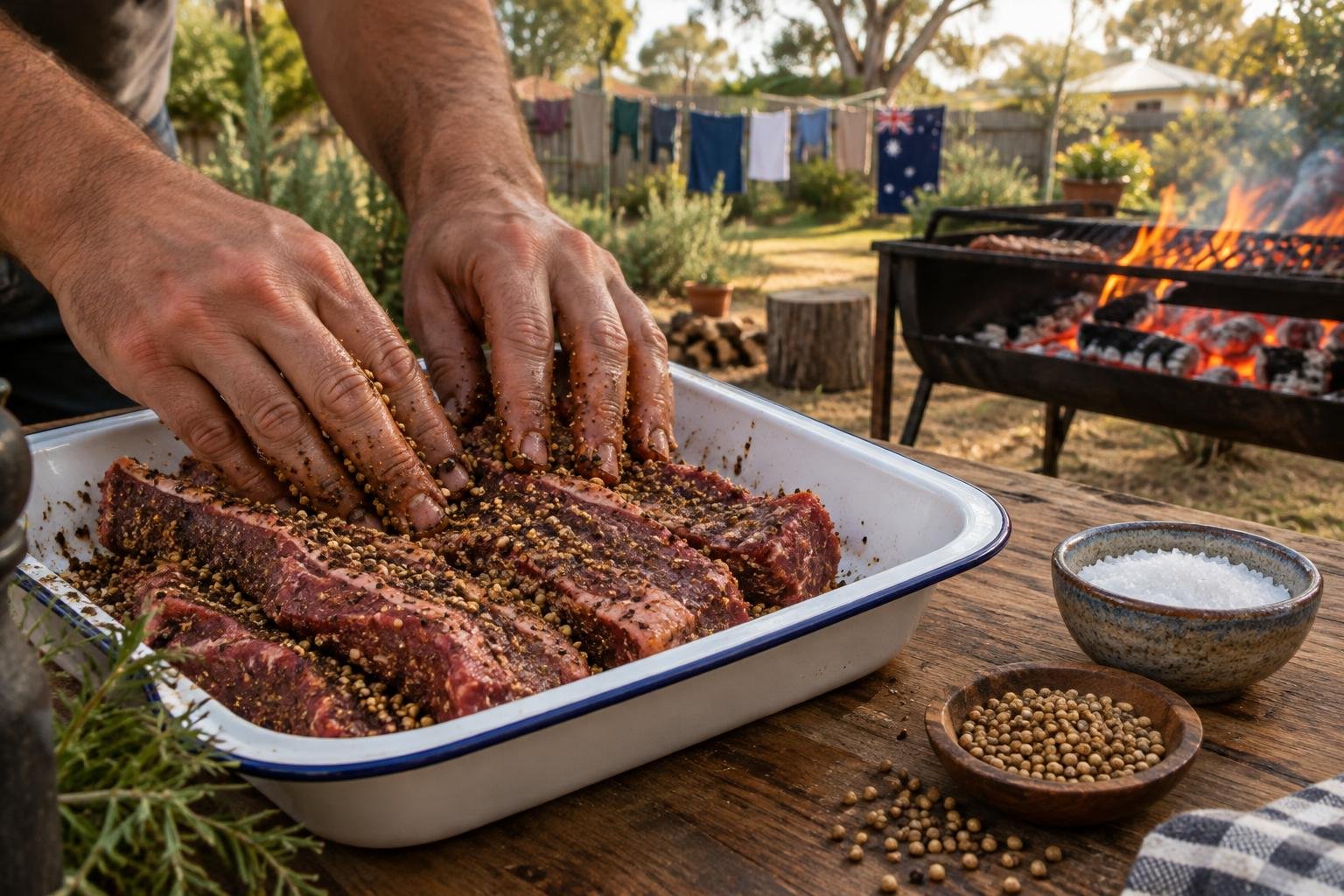
- Rub the mix into every face of every beef strip, then lay the strips in a non-metallic dish.
- Splash the vinegar over the strips, cover the dish and cure in the fridge for 12 to 24 hours, turning the strips once.
- Pat the strips dry, hang them with space between each one in a drying box, and dry until they have lost about half their weight.
Notes
Why the grind matters more than the quantity
Pre-ground coriander is the fastest way to ruin a biltong spice recipe. It loses its citrus smell on the shelf, and it disappears into the meat instead of sitting on top of it. Whole seed, toasted for a minute or two in a dry pan until it smells warm and a bit like oranges, gives you the real thing.
Then crack it, do not powder it. You want pieces about the size of a grain of sand, with a few bigger bits left in. The easiest way is a mortar and pestle. Failing that, put the seeds in a freezer bag and roll a rolling pin over them, or pulse them in an electric spice grinder for a few short bursts. If you buy a spice grinder, a cheap blade one is fine, as long as you stop before it becomes dust.
Pepper is the same story. Grind it coarse, from whole peppercorns, so you can see the flecks on the finished strip.
How to use the mix
Cut the beef into strips along the grain, about two centimetres thick. Mix the salt, coriander, pepper and sugar in a bowl, then rub it into every face of every strip. Lay the strips in a non-metallic dish, splash the vinegar over, and cover. Cure in the fridge for 12 to 24 hours, turning the strips once.
Some makers rinse the strips quickly in a vinegar and water mix before hanging. It helps if you were heavy-handed with the salt. Then pat dry and hang. If you are not sure where to hang them, our biltong box guide covers buying or building one.
If you live somewhere humid
The cure does a lot of the safety work, so it pays to be exact with the salt and not trim it to be “healthier”. Humid coastal areas also need good airflow while the meat dries. Our piece on biltong drying in Queensland humidity goes through that in detail.
Changing the mix to suit you
Once the base biltong spice recipe works, change one thing at a time so you can tell what did what.
- More coriander gives a brighter, more citrus taste. Go up to 20 g per kilo.
- Less sugar or none gets you closer to the dry, sharp shop style.
- Chilli flakes, about half a teaspoon per kilo, make a mild chilli biltong.
- Cloves or a pinch of nutmeg give a sweeter, older fashioned flavour. Use very little.
If you are chasing the flavour of a particular maker, buy a packet and taste it side by side. Our round-up of the best biltong in Australia helps you pick one, and the state-by-state list of South African shops tells you where to find it. If the same coriander and pepper style spices appear in your boerewors, compare notes with our boerewors spice mix guide, which shares the coriander base.
Is the recipe safe?
Salt, vinegar and drying are the safety system, so none of them is optional. For commercially sold dried meat, the Australia New Zealand Food Standards Code defines dried meat as meat dried to a water activity of 0.85 or lower, and Food Standards Australia New Zealand’s risk statement on uncooked dried meat explains why that number matters for Listeria. You cannot measure water activity at home, so weigh the meat instead. Biltong that has lost about half its starting weight, with the full cure on it, sits in safe traditional territory. The Code’s processing requirements standard has the legal definition if you want to read it.
Bin any strip with green or black mould, or one that smells wrong. Do not trim and hope.
Frequently asked questions
How much spice do I need per kilo of biltong?
Our mix uses 20 g of coarse salt, 15 g of whole coriander seed and 3 g of black pepper per kilogram of beef, plus a splash of brown vinegar. Other recipes use a little more or less, so adjust to taste on your second batch.
Should I use whole or ground coriander?
Whole seed, toasted and cracked. Ground coriander from a jar has usually lost most of its aroma and vanishes into the meat. Cracked seed leaves visible flecks and a much brighter taste.
Can I make the spice mix ahead of time?
Yes. Mix the salt, coriander, pepper and sugar and keep it in a sealed jar for a few weeks. Toast and crack the coriander just before you mix it, so it is as fresh as possible.
What vinegar is best for biltong?
Brown vinegar, sometimes sold as malt vinegar, is the traditional choice and the easiest to find. Apple cider vinegar works as well. Skip anything sweet, like balsamic.
Why is my biltong too salty?
Either the salt went in heavy, or the strips were thin and cured for the full 24 hours. Use less salt next time, shorten the cure, or give the strips a quick vinegar and water rinse before hanging.
Make a batch of the mix this weekend, cure a small piece of beef, and take notes on what you would change. By the third batch you will have your own version, and that is how every family recipe starts.