# Biltong box Australia: buy one or build one
The biltong box Australia question lands on every South African within a month of drying their first batch on a wire rack balanced over the stove and wondering why it took three extra days and smelled up the kitchen. Buy a ready-made box, or build one yourself from a fan, some mesh and an old cupboard. Both work, and this guide covers both.
Short version: buying gets you drying by the weekend for somewhere between $200 and $460, with the airflow already worked out for you. Building costs a fraction of that in parts, teaches you exactly how the thing works, and scales up the moment you outgrow it. Below is what a box actually needs to do, what is worth buying ready made, how to build your own properly, and the parts worth ordering either way.
Table of Contents
- What a biltong box actually needs to do
- Buy one: what is actually on the market in Australia
- Build one: the DIY biltong box in a weekend
- Buy or build: the biltong box Australia answer, in one table
- What to buy in Australia
- Once the box is built, the climate takes over
- Frequently asked questions
- Hang it and wait
What a biltong box actually needs to do
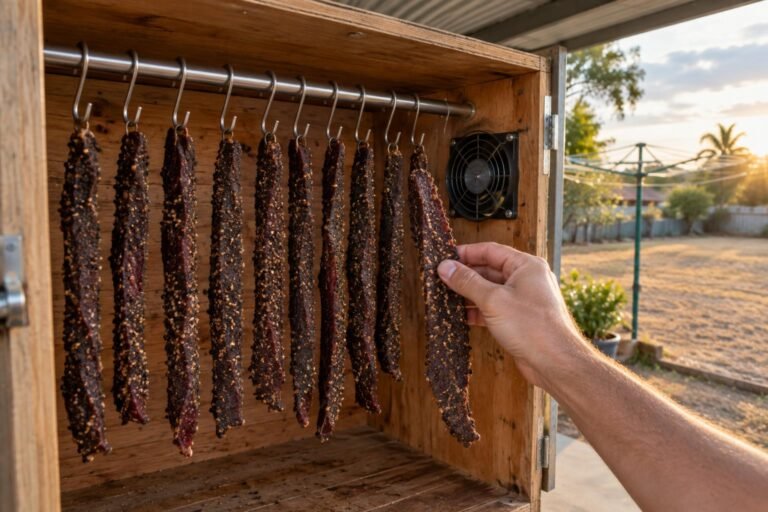
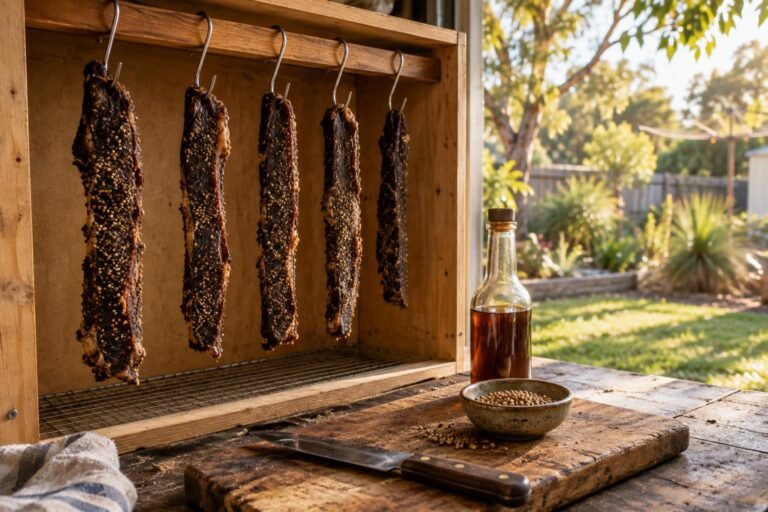
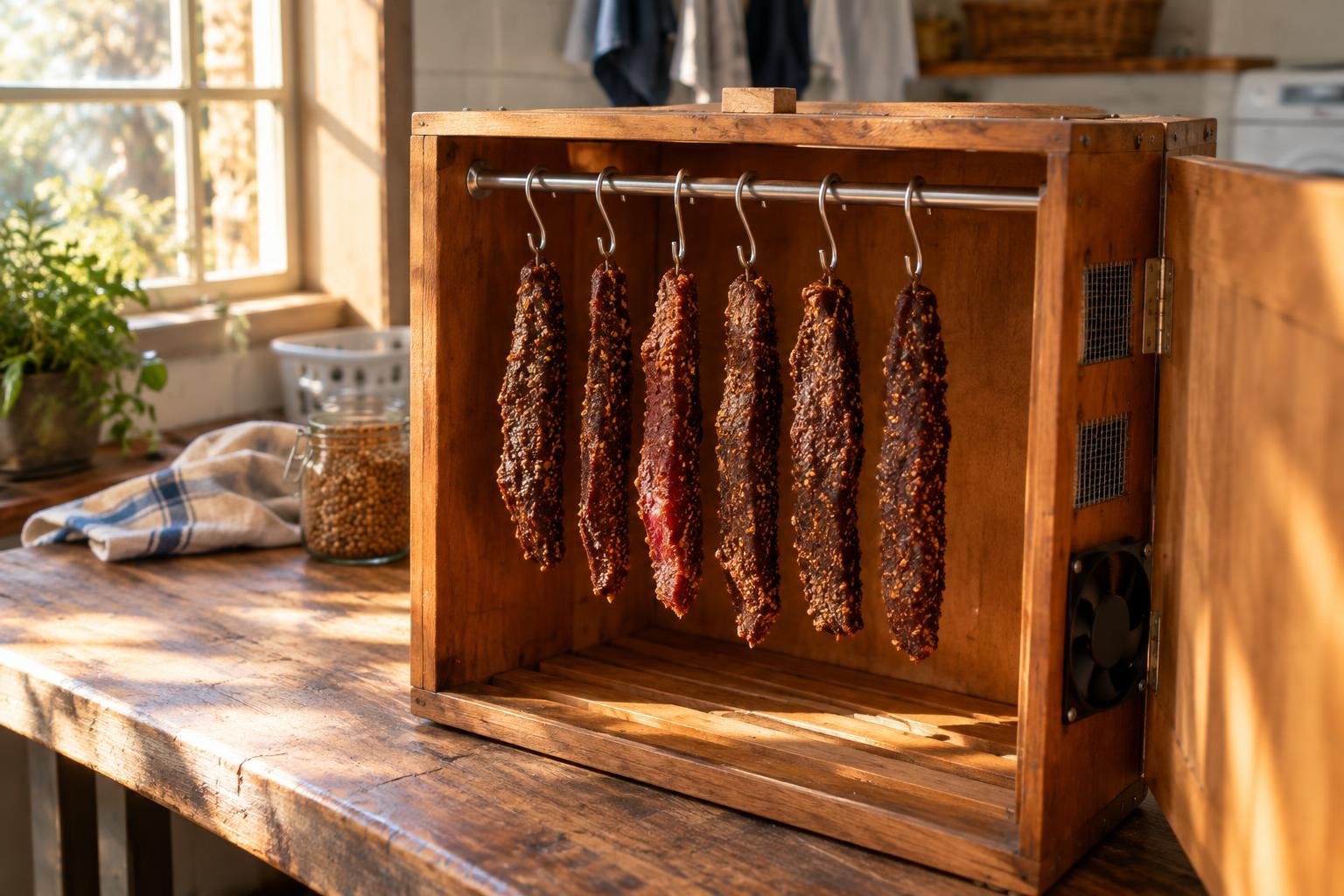
Biltong, for anyone new here, is air-dried spiced beef, cured in vinegar and salt before it hangs to dry. It does not need heat to dry. It needs moving air and somewhere to hang that keeps every strip clear of its neighbours. A biltong box is really just three things inside a container: a way for air to enter low and leave high, a small fan to keep that air moving instead of sitting still, and hooks or a rod to hang the meat so nothing touches.
Skip the light bulb some older recipes call for. It was there to nudge humidity down before small fans were cheap and reliable, and in most Australian homes a fan alone does the job without cooking the outside of the meat before the inside catches up. Mesh over every opening matters more than heat ever did, because a box full of drying meat with an open vent is an invitation to every fly in the yard. Food Standards Australia New Zealand treats getting the meat properly dry, not heat, as the real safeguard for a dried product like this, which lines up with what every biltong box on the market actually does.
Buy one: what is actually on the market in Australia
Two routes cover most of this market. Biltong Box, an Australian seller, makes three purpose-built sizes: a Medium and a Large that both run a dual fan system with adjustable airflow, and a Big Boss model with two lights and four fans across three speeds for anyone drying in real volume. Prices run from around $275 for the Medium, rated for two to three kilograms of wet meat, up to $462 for the Big Boss.
The other route is a complete box shipped through Amazon, landing closer to $200 to $220, with the fan, hanging hooks and a starter spice pack already included. It will not out-dry a purpose-built model in a properly humid climate, but for someone who wants meat hanging this weekend without building anything, it is the fastest path from empty bench to a working box.
Build one: the DIY biltong box in a weekend
A home-built biltong box costs a fraction of a bought one, and the design has not changed in decades because it does not need to. Start with a cupboard, an old bar fridge shell with the compressor pulled out, or a simple plywood box, roughly 30 centimetres wide and 60 to 90 centimetres tall for a household batch. Plain, untreated hardwood is the safe timber choice; skip anything chemically treated, because that treatment ends up on your dinner.
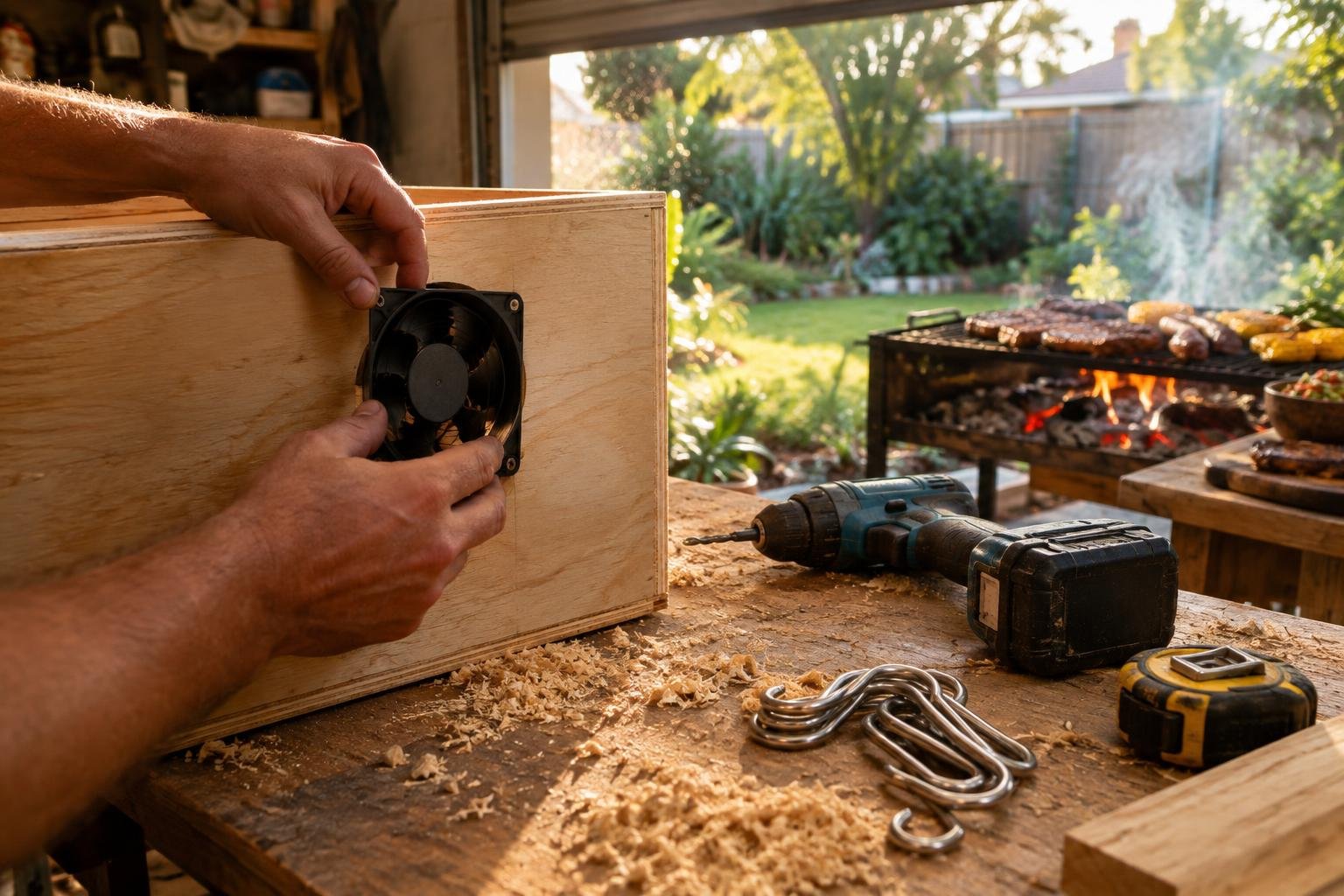
Cut ventilation holes near the top to let moist air escape, and a few lower down on each side to let dry air in. Cover every hole with insect mesh so nothing with wings gets a look in. Fit a small 12V computer case fan low in the box, wired to an old phone charger or a spare PC power supply, and let it run while the meat dries.
Drill or cut a hole for a wooden dowel or a length of steel rod near the top, then hang your S-hooks from it. Space the meat so no two strips touch. That is the entire build, no heat source required, put together from the hardware store and a Saturday morning with basic tools.
Buy or build: the biltong box Australia answer, in one table
| What matters | Buy a ready-made box | Build your own |
|---|---|---|
| Upfront cost | $200 to $460 | Roughly $50 to $70 in parts |
| Time to first batch | The same weekend it arrives | A Saturday of cutting and fitting |
| Airflow already worked out | Yes, tested by the maker | You work it out yourself, and it can take a batch or two to get right |
| Capacity | Fixed by the model you buy | Whatever box you start with, and easy to upsize later |
| Best for | A first box, or no spare weekend | Anyone handy who wants to dry more for less |
What to buy in Australia
Whichever path you take, these three cover it. No prices are quoted here because they move around, and a figure written today would be wrong by the time you read this.
Some links below are affiliate links. Same price for you, a small commission for the braai fund. As an Amazon Associate, Braai Mate earns from qualifying purchases.
Home Biltong Maker Box (biltbox)
A complete box in FSC linden wood, with the fan, hanging hooks, a drip tray and a starter spice pack already included. The fastest way from empty bench to a hanging batch with nothing to build.
Affiliate link. Same price for you, a small commission for the braai fund.
upHere 120mm 12V Computer Case Fan, 3-Pack
The standard part every DIY box is built around. Buying three means a spare on hand, because a fan that runs for months on end eventually gives out, usually on a Friday when you have just hung a fresh batch.
Affiliate link. Same price for you, a small commission for the braai fund.
Stainless Steel S-Hooks, 10 Pack (Artoys)
Food-grade SUS304 stainless, sharp enough to hang a strip cleanly and smooth on the other end so it will not catch a hand reaching past. Ten is enough for a full rod with room to space every strip apart.
Affiliate link. Same price for you, a small commission for the braai fund.
Once the box is built, the climate takes over
A good biltong box levels the playing field, but it does not cancel out the weather. Humid air is still humid air once it is inside the box, just moving instead of sitting still. Anyone near the Queensland coast should read our guide to beating biltong mould in Queensland humidity before the first batch goes in, because the fix there is about timing more than equipment.
If you have never made a batch at all, our full walkthrough on how to make biltong at home in Australia covers the cut of beef, the cure and the drying time end to end. And if building or buying a box is more than you want to take on this month, our state by state directory of South African shops and our roundup of the best biltong in Australia will get a bag in your hands without any hardware at all.
Frequently asked questions
Do I need a light bulb in a biltong box?
No. A fan alone gives the airflow that dries the meat, and skipping the bulb avoids gently cooking the outside of a strip before the middle has caught up. Older recipes call for a bulb because fans used to be harder to come by, not because heat is doing anything useful.
How big a biltong box do I need?
For a household batch, a box around 30 centimetres wide and 60 to 90 centimetres tall handles a rod of strips comfortably. Go bigger only if you are already drying for extended family or mates on a regular basis, because more space with the same fan just means slower airflow reaching the middle.
Can I use an old bar fridge as a biltong box?
Yes, and plenty of people do, once the compressor and shelving are pulled out. Cut and mesh your vent holes the same way you would for a timber box, fit the fan low down, and the insulated walls do no harm at all.
What size fan does a biltong box need?
A single 120mm 12V computer case fan is the standard choice for a household box, and it is the same part used in desktop computers, which is why it is cheap and easy to replace. Larger boxes, or anyone drying serious volume, run two.
Is a bought biltong box worth the extra cost over building one?
If your time is worth more to you than the difference in dollars, yes. A bought box also takes the guesswork out of airflow, which matters if your first few DIY batches keep coming out patchy. Plenty of people start with a bought box and build a bigger one later once they know what they actually want.
Hang it and wait
The box is the easy half of biltong box Australia. Buy one this week if you want meat hanging by Saturday, or build one if a free afternoon and a hardware store trip sound like your idea of fun. Either way, the fan and the mesh are doing the real work, not the box itself.