A good chakalaka recipe is not complicated. Onion, capsicum, carrot, curry powder and a tin of baked beans, cooked down into a spicy relish that sits next to the meat and soaks into the pap. Every ingredient is on an ordinary Australian supermarket shelf.
So why does the one you make here taste wrong? Almost always the curry powder. The yellow tin in an Australian cupboard and the box in a South African one are two different spice blends. Swapping one for the other changes the dish more than anything else you could get wrong. That is what this post is really about.
Table of Contents
What chakalaka is, and what it is not
A chakalaka recipe produces a cooked vegetable relish, spicy and a little sweet, served warm or at room temperature beside grilled meat. It is not a salad and it is not a curry. It is closer to a chunky, spiced tomato sauce with things in it.
It goes next to the meat at a braai, the South African word for a barbecue built over wood or charcoal. It also goes on bread, next to a curry, over rice, or on its own at breakfast. In our roundup of braai side dishes from an Australian supermarket it is the first one on the list, because nothing about it needs a specialty shop.
Nothing except the curry powder, which is where most people come unstuck.
The curry powder is the whole problem
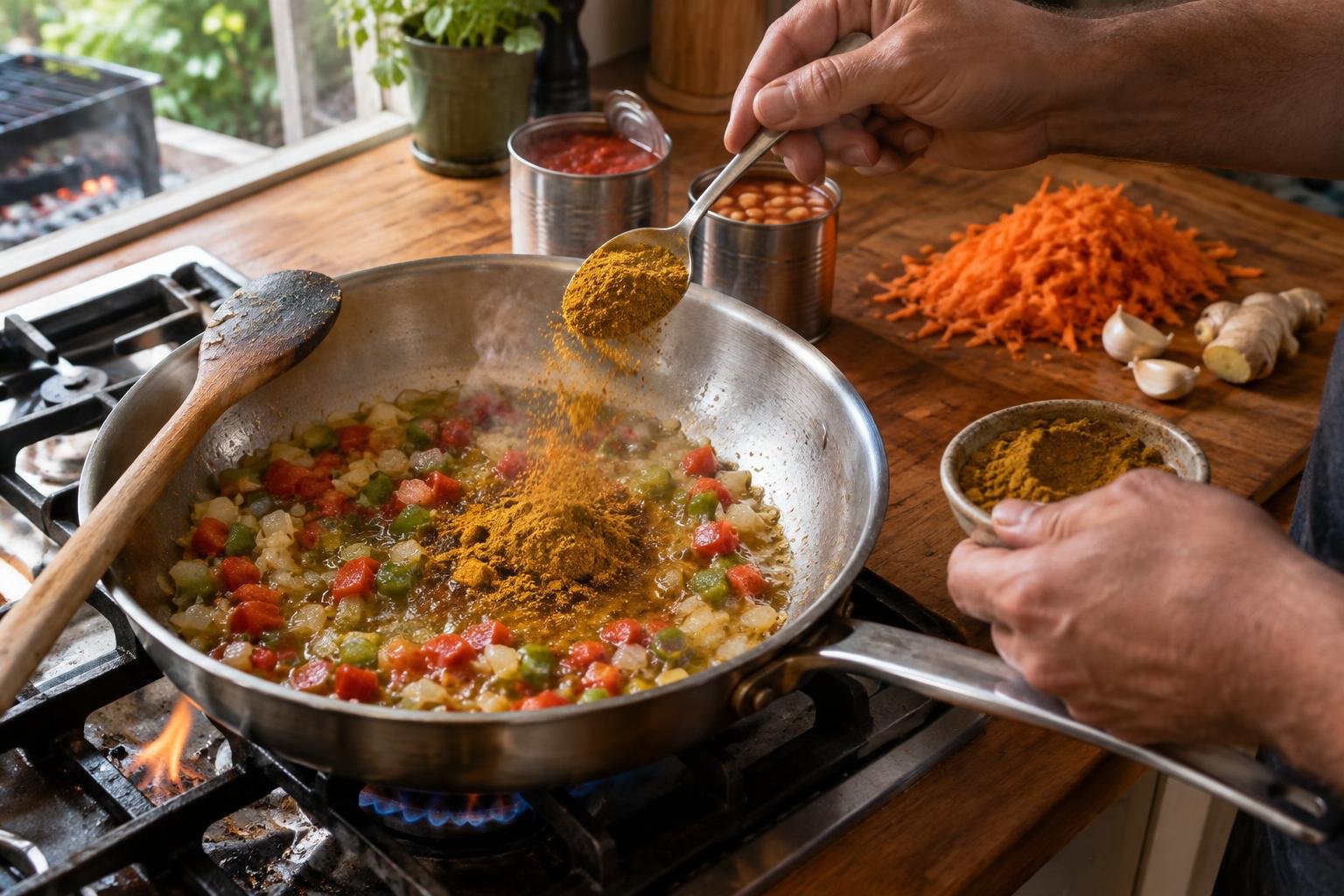
South African recipes say “curry powder” and mean a specific thing. Australian recipes say “curry powder” and mean a different specific thing. Neither writes it down, because in their own country there is nothing to explain.
Here are both, straight off the manufacturers’ own pages.
| Keen’s Traditional (Australia) | Rajah Mild Masala (South Africa) | |
|---|---|---|
| Leads with | Turmeric | Coriander |
| Full list | Turmeric, coriander, salt, fenugreek, black pepper, chilli, rice flour, allspice, celery | Coriander, wheat bran, paprika, chilli, methee, garlic, cumin, cassia, celery, ginger, fennel, turmeric |
| Has, that the other does not | Salt, black pepper, rice flour, allspice | Paprika, garlic, cumin, cassia, ginger, fennel |
| Pack | 60 g and 120 g | 100 g |
Read the third row again, because that is the answer. Rajah carries cumin, cassia, garlic, ginger and fennel. Those are the warm, rounded notes you are missing. Keen’s has none of them.
Turmeric tells the same story from the other end. It is the first thing in Keen’s and the last thing in Rajah, so the Australian tin gives you a yellower, more earthy, more turmeric-forward dish. Salt is third in the Keen’s list and does not appear in Rajah’s at all. A spoon of Keen’s therefore seasons the pot before you have added any salt yourself.
None of this makes Keen’s a bad product. It is a good curry powder and it has been in Australian kitchens for generations. It is just not the spice your mother used.
What to do about it. Buy Rajah from a South African grocer, and our state by state directory of South African shops in Australia lists who stocks it. It keeps for a year, so buy two. Cooking tonight with what is in the cupboard? Use Keen’s, but hold the salt back until the end. Add a quarter teaspoon each of ground cumin and ground ginger to fill the gap. It will not be identical. It will be close enough that nobody asks.
The tin of beans
Most traditional versions finish with a tin of baked beans in tomato sauce, and you should not skip it. It is what gives chakalaka its slightly sweet, saucy body rather than leaving you with fried vegetables.
Koo Baked Beans in Tomato Sauce is the tin South Africans reach for, and South African shops here stock it. If there is not one near you, SPC Baked Beans Rich Tomato is the supermarket answer. It is a 425 g tin of navy beans in tomato sauce, made in Australia. Heinz works the same way.
Do not drain the tin. The sauce is part of the recipe. We went through the same question in more detail in our baked bean salad post, where the tin is the entire dish.
The chakalaka recipe
This makes enough for six as a side. Fifteen minutes of chopping and grating, then about twenty five minutes on the stove. The quantities are our working version. Read the curry powder section above before you start, because that one choice matters more than anything in the list.
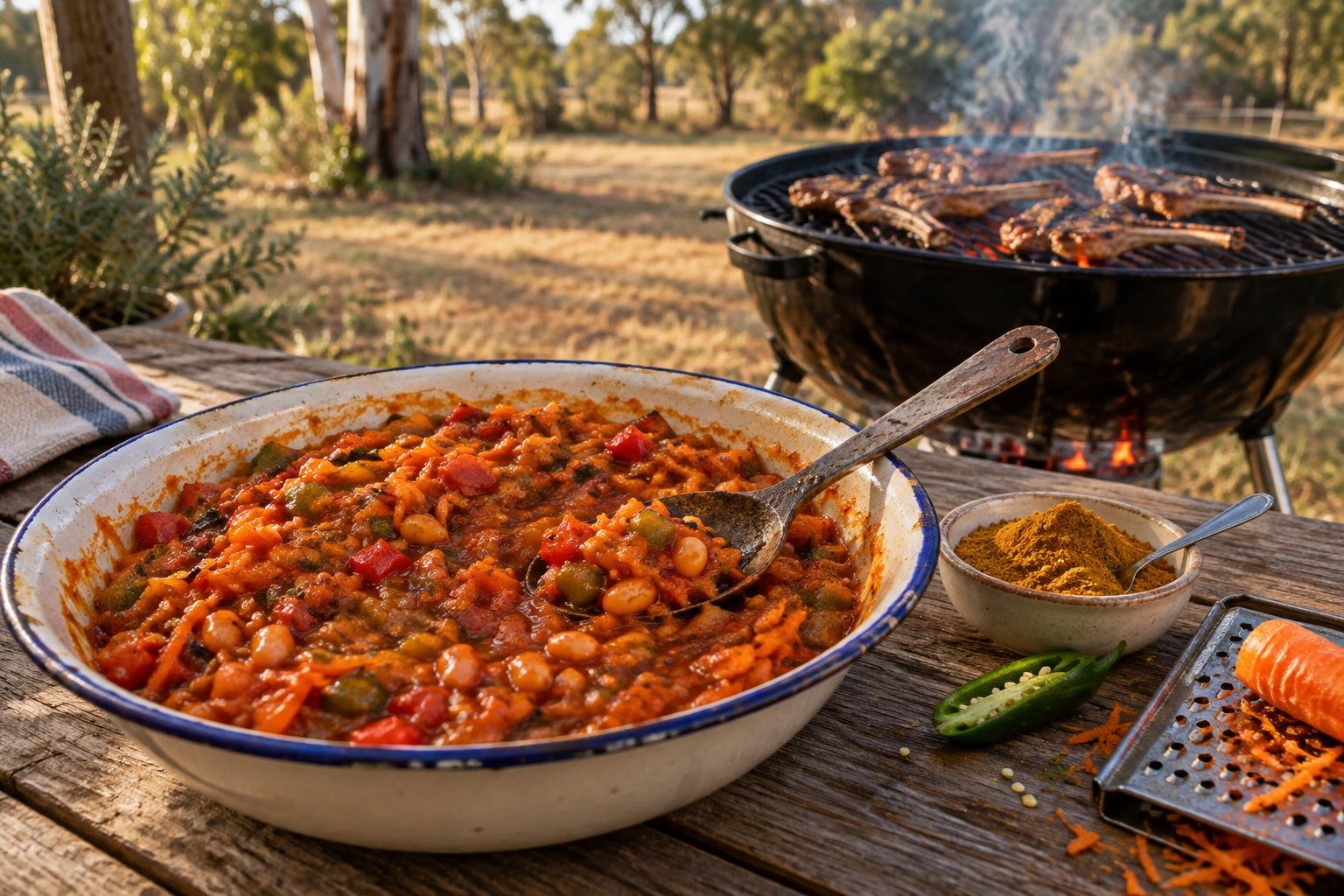
Chakalaka
Ingredients
Method
- Heat the oil in a wide pan over medium heat and cook the onion until soft and see-through, about 5 minutes.
- Add the capsicum, garlic and ginger and cook for 3 minutes more, until the capsicum softens at the edges.
- Stir in the curry powder and paprika and fry them in the oil for a full minute, until the kitchen smells of it. This is the step most versions rush.
- Add the grated carrot, stir to coat it in the spice, and cook for 2 minutes.
- Tip in the chopped tomatoes, season with salt and pepper, and simmer uncovered for 10 minutes until the sauce thickens and darkens.
- Add the fresh chilli if you are using it, then fold the whole tin of baked beans through, sauce and all.
- Cook gently for 5 minutes more, stirring as little as you can so the beans keep their shape.
- Take it off the heat and taste for salt. Cool it, then chill overnight if you have the time.
Notes
It should taste sweet first, then savoury, with the heat arriving last and sitting at the back. If it tastes flat, it wants salt. If it tastes raw and sharp, it has not simmered long enough. If it tastes like curried vegetables, the curry powder went in too late and never fried properly.
Getting the heat right
Chakalaka should warm you, not hurt you. Two things control that, and it helps to use only one of them at a time.
The first is the curry powder itself. Rajah comes in four strengths: Flavourful and Mild, Mild Masala, Mild and Spicy, and Hot. Pick the grade and you have set the floor for the whole pot. Mild Masala is the safe one for a mixed table.
The second is fresh chilli. Long green chillies from an Australian supermarket are on the gentle side, so one gives you warmth and two gives you a noticeable kick. Bird’s eye chillies are a different animal, and half of one is plenty.
Add the fresh chilli late and taste before you commit to more. Heat builds overnight in the fridge, so a pot that tastes right on Friday night can be sharp by Saturday lunch.
Make it the day before
This is the real reason to put chakalaka on a braai menu. It is better on day two, it is eaten at room temperature, and it takes up no space on the fire.
Cook it the night before, cool it, and keep it covered in the fridge. Take it out when you light the coals so it is not fridge cold when the meat comes off. It keeps three or four days, and it freezes well in portions if you have made a big pot.
On a day when you are cooking for people, a side dish you finished yesterday is worth more than a clever one you have to watch.
Variations we would stand behind
- With cabbage. A cup of finely shredded cabbage, added with the carrot. It stretches the pot and is how a lot of families make it. Expect a softer, more stew-like result.
- A spoon of chutney. Stir a tablespoon of Mrs Balls through at the end for fruit and sweetness. If you cannot find it, our Mrs Balls chutney substitute guide covers the Australian jars that come close.
- Butter beans instead of baked beans. Drain a tin of butter beans and add a tablespoon of tomato paste to make up the lost sauce. Milder and less sweet.
- Without the beans at all. A legitimate version, closer to a plain vegetable relish. Simmer the tomato five minutes longer so it thickens on its own.
Frequently asked questions
What curry powder should I use for a chakalaka recipe in Australia?
Rajah, from a South African shop, because it is built on coriander with cumin, cassia, garlic, ginger and fennel behind it. Keen’s Traditional is the Australian supermarket option and leads with turmeric instead, with salt high in the list and none of those warm spices. Keen’s works, but hold the salt back and add a little ground cumin and ginger.
Do I have to put baked beans in chakalaka?
No, but most traditional versions do, and the tin is what gives the dish its sweet, saucy body. Without it you have a vegetable relish rather than chakalaka. Use the whole tin, sauce and all.
Is chakalaka meant to be eaten hot or cold?
Room temperature, most of the time. It is made ahead and set out beside the meat, so it is neither hot from the pan nor cold from the fridge. Warm is fine if you are serving it with pap.
Why is my chakalaka bland?
Usually the curry powder was stirred in with the wet ingredients instead of fried in the oil first. Give it a full minute in the hot oil with the onion and capsicum before any tomato goes in. After that, it is almost always salt.
How long does chakalaka keep?
Three or four days covered in the fridge, and it improves for the first two. It also freezes well in portion sized containers for a couple of months.
What do you serve chakalaka with?
Pap, bread, rice, or straight onto the plate next to chops, chicken and wors, the coiled South African sausage. It is also good cold on toast the next morning.
Make it once with Rajah and once with Keen’s, a week apart, and you will taste exactly what this post is about. Still rebuilding a South African pantry in an Australian kitchen? Our guide to ingredient substitutes is the place to start. The five ingredient potjie is what to cook while the chakalaka sits in the fridge doing its work.