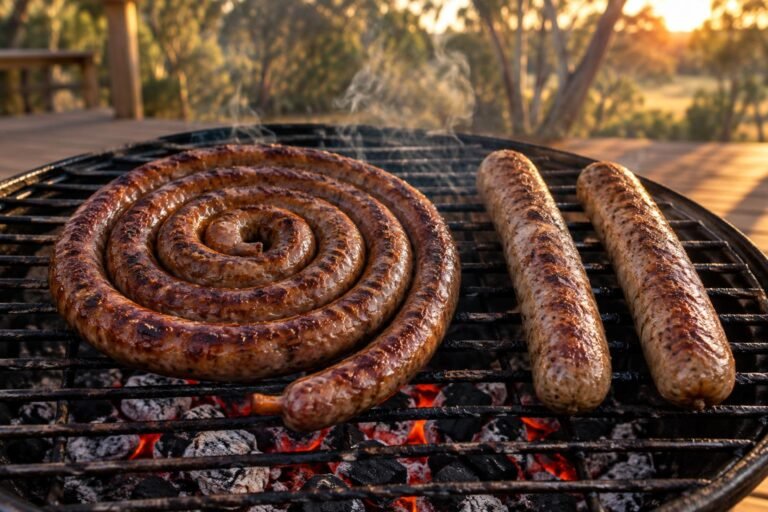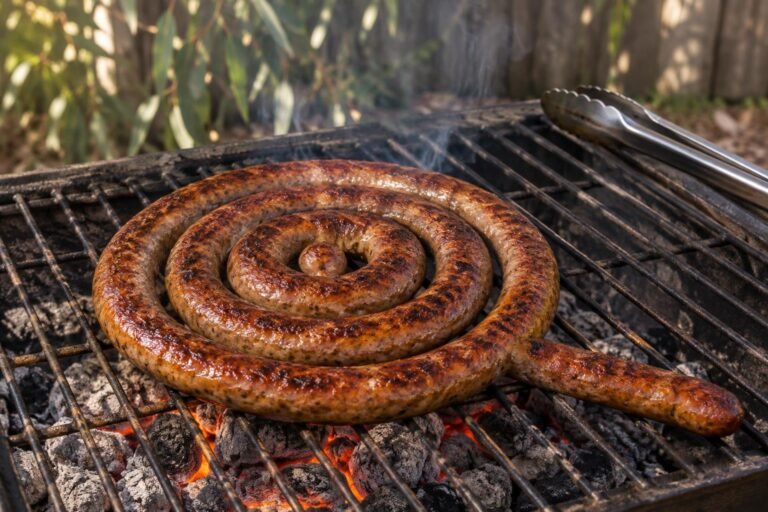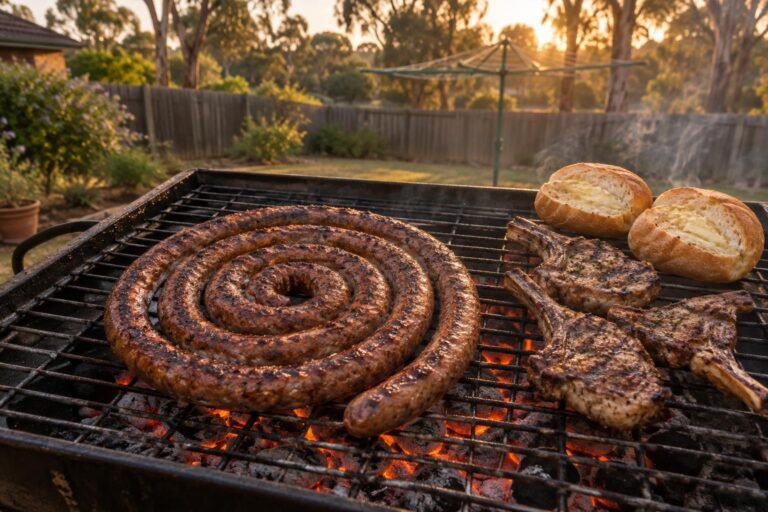
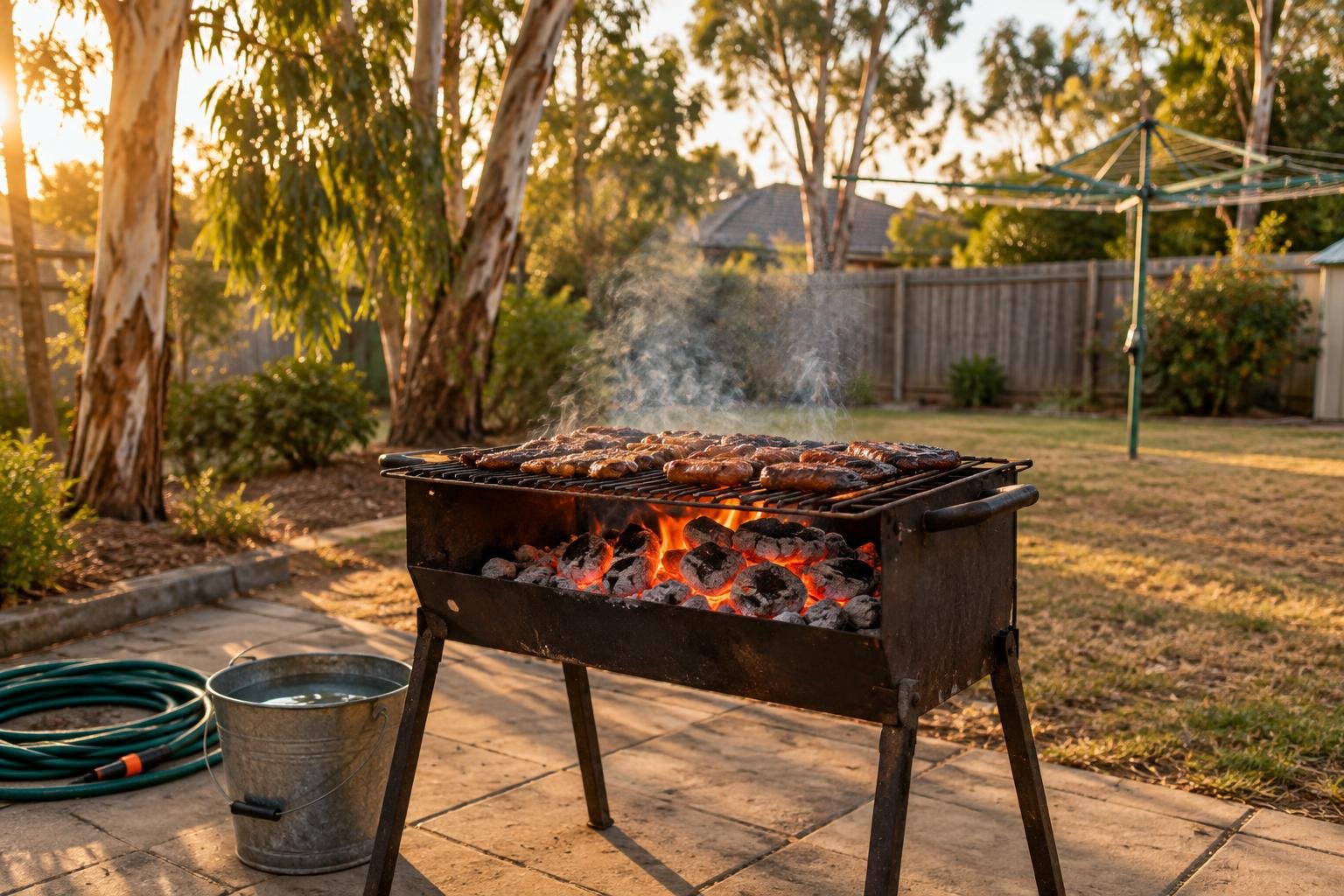
Back home, a braai was a decision about weather and hunger, not about the law. In Australia it is both. The braai fire ban rules in Australia are strict, they change from state to state, and they can turn a quiet Saturday cook into a four-figure fine if you get them wrong. A braai is the South African barbecue, cooked over real wood or charcoal rather than gas, and burning solid fuel outdoors is exactly what Australia’s fire authorities clamp down on when the bush dries out. This guide walks through the rules in plain terms, state by state, so you know when the coals are legal and when they have to stay in the bag.
None of this is meant to scare you off the fire. Most of the year, in most places, a braai in your own backyard is perfectly fine. You just need to know the two systems that decide, and how to check them in under a minute.
Table of Contents
- The two things every braai in Australia has to obey
- The one rule that never changes: no solid fuel on a total fire ban day
- Braai fire ban rules in Australia, state by state
- How to check before you light the fire
- Braaing safely when the fire danger is high
- Frequently asked questions
- Check the sky, then the app, then light the fire
The two things every braai in Australia has to obey
Two separate systems control outdoor fire in Australia, and people mix them up all the time.
The first is the fire danger rating. Since 2022 the whole country uses one national scale, the Australian Fire Danger Rating System, with four levels: Moderate, High, Extreme and Catastrophic, plus days with no rating at all. It is a forecast of how dangerous a fire would be if one started that day. On its own, a high rating does not ban your braai, but it tells you which way the wind is blowing, in every sense.
The second is the total fire ban, and this is the one with teeth. A total fire ban, often shortened to TOBAN or TFB, is declared by your state fire service for a specific district on a specific day when conditions are dangerous. When a total fire ban is in force, lighting or keeping a solid-fuel fire outdoors is against the law, full stop. Many states also run a longer declared fire season, sometimes called the Fire Danger Period or Bushfire Season, with standing rules and permits that apply for months at a time.
So before any braai in the warmer months, you are really asking two questions. Is there a total fire ban in my district today, and am I inside a declared fire season with extra rules? The rest of this guide answers both.
The one rule that never changes: no solid fuel on a total fire ban day
Here is the rule that holds in every state and territory. On a total fire ban day, you cannot cook over wood, charcoal or heat beads outdoors. It does not matter that your braai is in a proper drum, on a paved courtyard, or that you are standing over it with a hose. Solid fuel is solid fuel, and on a ban day it stays unlit.
Gas and electric are the usual way around it. Most states allow a gas or electric barbecue on a total fire ban day, but only under conditions: a commercially made or fixed appliance, a cleared space around it, an adult watching it the whole time, and water close by. The exact distances and wording differ by state, which is the whole reason this guide goes one by one. If you want the coals-versus-gas debate in full, we settle it in our braai vs bbq guide.
Braai fire ban rules in Australia, state by state
Rules and penalties change, so treat the figures below as a guide and check your state fire service on the day. Every state publishes the current fire danger rating and any total fire bans on its website and app.
New South Wales
In New South Wales the Rural Fire Service runs the show. On a total fire ban day, a barbecue or pizza oven that burns solid fuel such as wood, charcoal or heat beads cannot be used outside. A gas or electric barbecue is allowed on a ban day only if it sits on cleared ground, is watched by an adult, and has water on hand. Breaching a total fire ban can bring on-the-spot fines of more than 1,000 dollars for an individual, and far heavier penalties if a fire you light causes damage or injury. Check the day’s rating and bans on the NSW RFS total fire ban rules page or the Hazards Near Me app.
Victoria
Victoria is the strictest, and worth reading twice if you live there. The Country Fire Authority states that on a day of total fire ban it is illegal to use any solid-fuel outdoor cooker, wood, coal or heat beads, anywhere in Victoria. Gas and electric cookers are allowed on a ban day, but they must be commercially made or a fixed installation, kept well clear of anything that can burn, and supervised by an adult. The CFA warns that breaking the rules can mean penalties running past 46,000 dollars, up to 24 months in prison, or both. Victoria also has a declared Fire Danger Period each year with its own rules, so check the CFA “Can I or Can’t I” page before the season starts.
Queensland
In Queensland the Queensland Fire Department and its rural fire service handle fire bans, which are often declared locally rather than statewide. During a fire ban, gas and electric barbecues may be used under the usual safety conditions, while solid-fuel cooking is prohibited. Because Queensland’s bans are frequently council or region specific, the local picture matters more than a statewide headline. Check fire.qld.gov.au for the bans that apply to your area.
South Australia
South Australia’s Country Fire Service has a particular wrinkle worth knowing. On a total fire ban day a solid-fuel kettle barbecue, the kind that burns wood, charcoal or heat beads, cannot be used at all unless you hold a Schedule 10 permit, and those are issued only in limited circumstances. Gas and electric barbecues are allowed on a ban day if you clear the ground around them, keep them supervised, and have water ready. South Australia also runs a Fire Danger Season with standing rules. Check the CFS “What can I do, what can’t I do” page for the current season.
Western Australia
In Western Australia the Department of Fire and Emergency Services sets the rules, and local governments declare Prohibited and Restricted Burning periods on top. On a total fire ban you cannot use any cooker that needs solid fuel, which explicitly includes wood-fired ovens and coal-burning kettle barbecues of the Weber type. Gas and electric are the permitted alternatives under the usual conditions. Because your local council can add its own restrictions, check both the DFES site and your council before you light up.
Tasmania, the ACT and the Northern Territory
The smaller jurisdictions follow the same core principle: no solid fuel outdoors on a total fire ban day, with gas and electric allowed under safety conditions. In Tasmania it is the Tasmania Fire Service, in the ACT the Emergency Services Agency, and in the Northern Territory Bushfires NT and the local fire service. The Territory’s fire season runs at a different time of year to the southern states, which catches people out. Whichever one covers you, its website publishes the day’s ratings and bans.
How to check before you light the fire
Checking takes less time than lighting the chimney. Each state fire service publishes the day’s fire danger rating and any total fire bans on its website every afternoon for the next day, and on a free app: Hazards Near Me in New South Wales, VicEmergency in Victoria, and the equivalents elsewhere. Search your district, look for two things, the rating and whether a total fire ban is declared, and you have your answer.
A good habit in fire season is to check the night before, not as the guests arrive. If a total fire ban lands on your braai day, you have time to switch to gas, move the cook indoors, or simply postpone. A potjie, the cast-iron three-legged pot for slow stews over coals, is just as stuck on a ban day as a braai grid, so the same check applies before you plan a long cook.
Braaing safely when the fire danger is high
Even on a legal day, high fire danger asks for more care. Clear a good space around the fire, keep it well away from fences, sheds, dry grass and the eaves of the house, and never walk away and leave it. Have a bucket of water or a running hose within reach, not in the shed. Let the coals die down fully and douse them before bed, because a warm braai left overnight in a dry summer is how backyard fires start.
If the coals are off the table for the day, gas will get you a braai-shaped result, even if a purist will sniff at it. It is not the same fire and not quite the same flavour, but it keeps the ritual alive and keeps you on the right side of the law. On the days the fire danger is simply too high, the safest and most South African thing to do is to wait for a better one.
Frequently asked questions
Q: Can I use my braai on a total fire ban day in Australia?
A: No. On a total fire ban day, cooking over wood, charcoal or heat beads outdoors is illegal in every state and territory. A gas or electric barbecue is usually allowed under safety conditions, but the solid-fuel fire stays unlit. Always check your state fire service for the day’s bans.
Q: What are the braai fire ban rules in Australia if I only have a small backyard fire?
A: Size does not exempt you. The bans apply to any solid-fuel fire outdoors, from a full drum braai to a small kettle of coals. On a total fire ban day it is banned regardless of scale, and on normal days you still keep it cleared, supervised and doused.
Q: How do I know if there is a total fire ban where I live?
A: Your state fire service declares total fire bans by district and publishes them each afternoon for the following day, on its website and a free app such as Hazards Near Me or VicEmergency. Search your district and check both the fire danger rating and whether a ban is in force.
Q: Is a gas barbecue always allowed when a braai is not?
A: Usually, but not automatically. Most states permit gas and electric barbecues on a total fire ban day only if the appliance is commercially made or fixed, kept clear of anything flammable, supervised by an adult, and has water nearby. Some public reserves and parks may still ban them, so check local signage.
Q: What happens if I get caught braaing during a fire ban?
A: Penalties are serious and vary by state, from on-the-spot fines in the four figures to, in Victoria, penalties that can run past 46,000 dollars or prison. If a fire you light causes damage or injury, the consequences are far graver. The rules exist because a single stray ember in a dry summer can do enormous harm.
Check the sky, then the app, then light the fire
The short version: know the difference between a fire danger rating and a total fire ban, never cook over solid fuel on a ban day, and check your state fire service before every braai in fire season. Do that and you can braai through an Australian summer with a clear conscience and an intact backyard. Save this guide, and before your next braai in the warmer months, open your state’s fire app first and the fire-lighters second. The coals will keep. The fine will not.