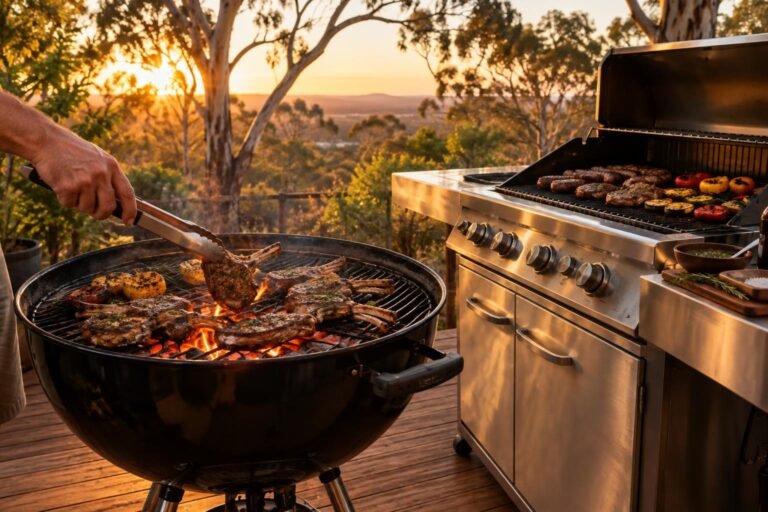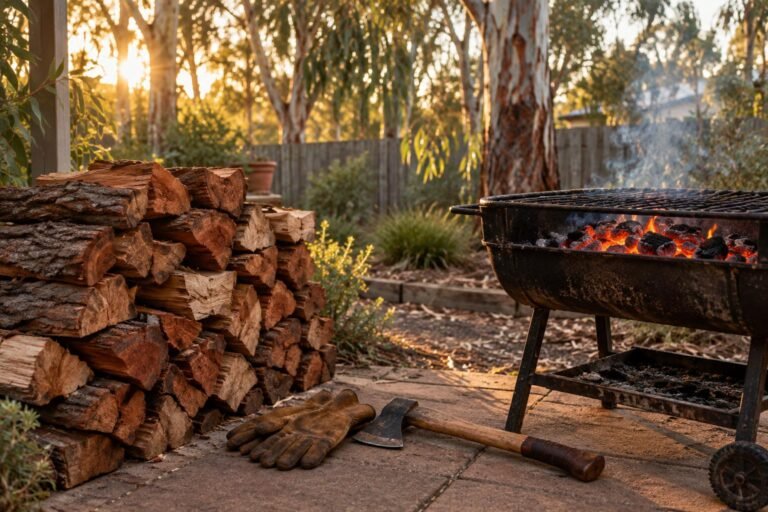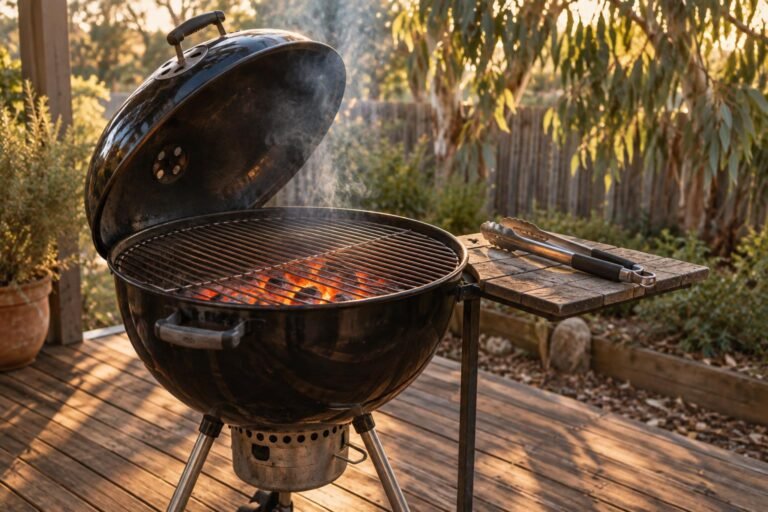
The charcoal vs briquettes braai question lands on every South African the first time they stand in an Australian hardware aisle. Back home the fire was usually wood, burnt down to coals over an hour of talking. Here the choice is a bag of lump charcoal or a bag of briquettes, and nobody tells you which one behaves like the fire you grew up with.
Short answer: lump charcoal gets hotter, faster, and suits anything you cook in half an hour, so wors, chops and steak. Briquettes hold a steady, lower heat for hours, so they suit a potjie, a whole chicken or a leg of lamb. Most of us end up owning both and choosing by what is on the menu.
Two words first, because the Australian and South African labels do not line up. A braai is a South African barbecue, cooked over coals rather than a gas burner. Wors is boerewors, the thick coiled sausage, and a potjie is the three legged cast iron pot that sits in the coals for hours. If a friend here says heat beads, they mean briquettes, after Heat Beads, the brand that has owned that shelf in Australia for decades.
Table of Contents
- What you are actually choosing between
- The charcoal vs briquettes braai answer, in one table
- Heat: one burns hotter, the other burns longer
- Lighting, and the firelighter taste
- Ash, cost and what happens to the leftovers
- What to buy in Australia
- The day neither one is allowed
- Frequently asked questions
- So which bag goes in the trolley
What you are actually choosing between
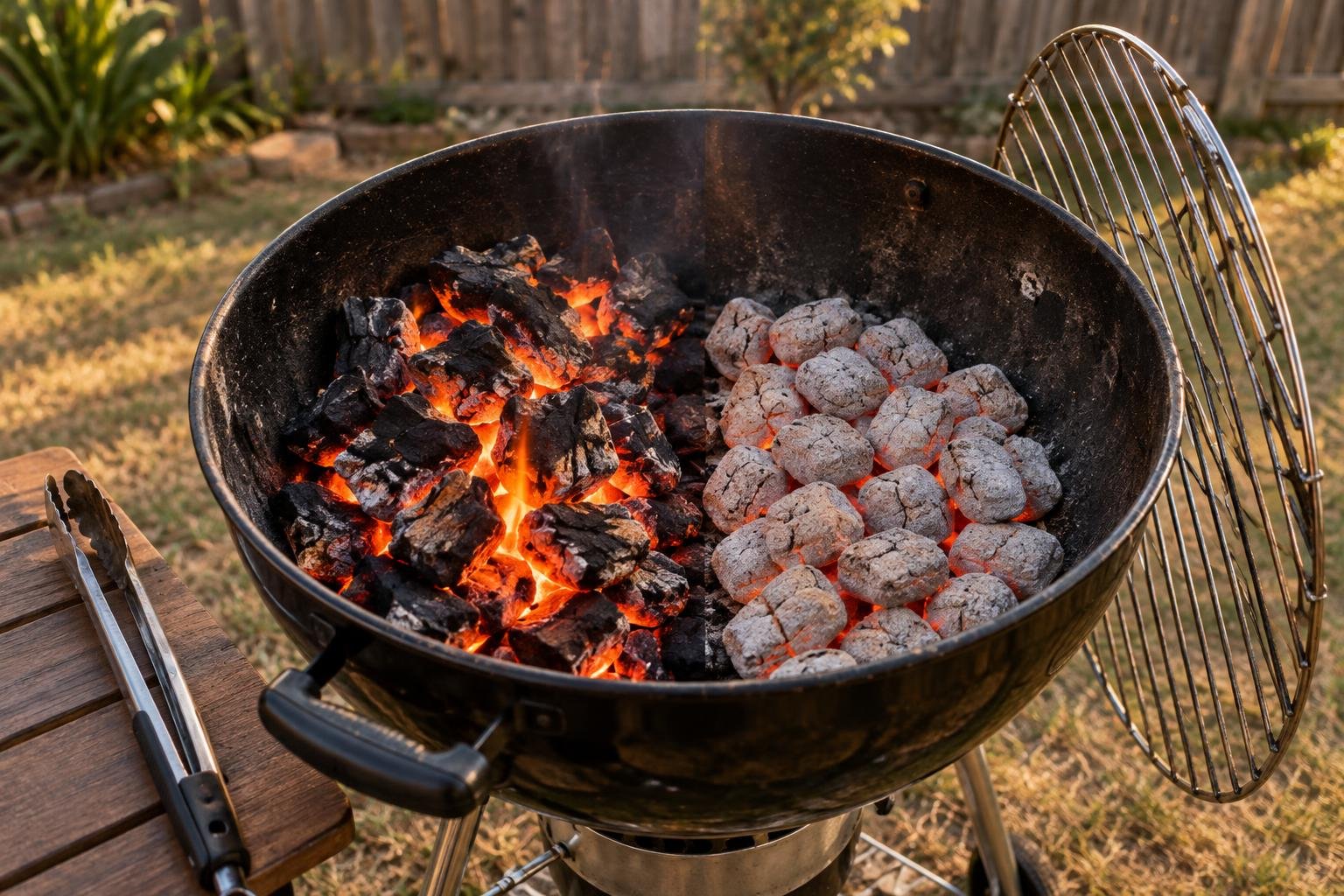
Before the charcoal vs briquettes braai argument can go anywhere, it helps to know what is in each bag.
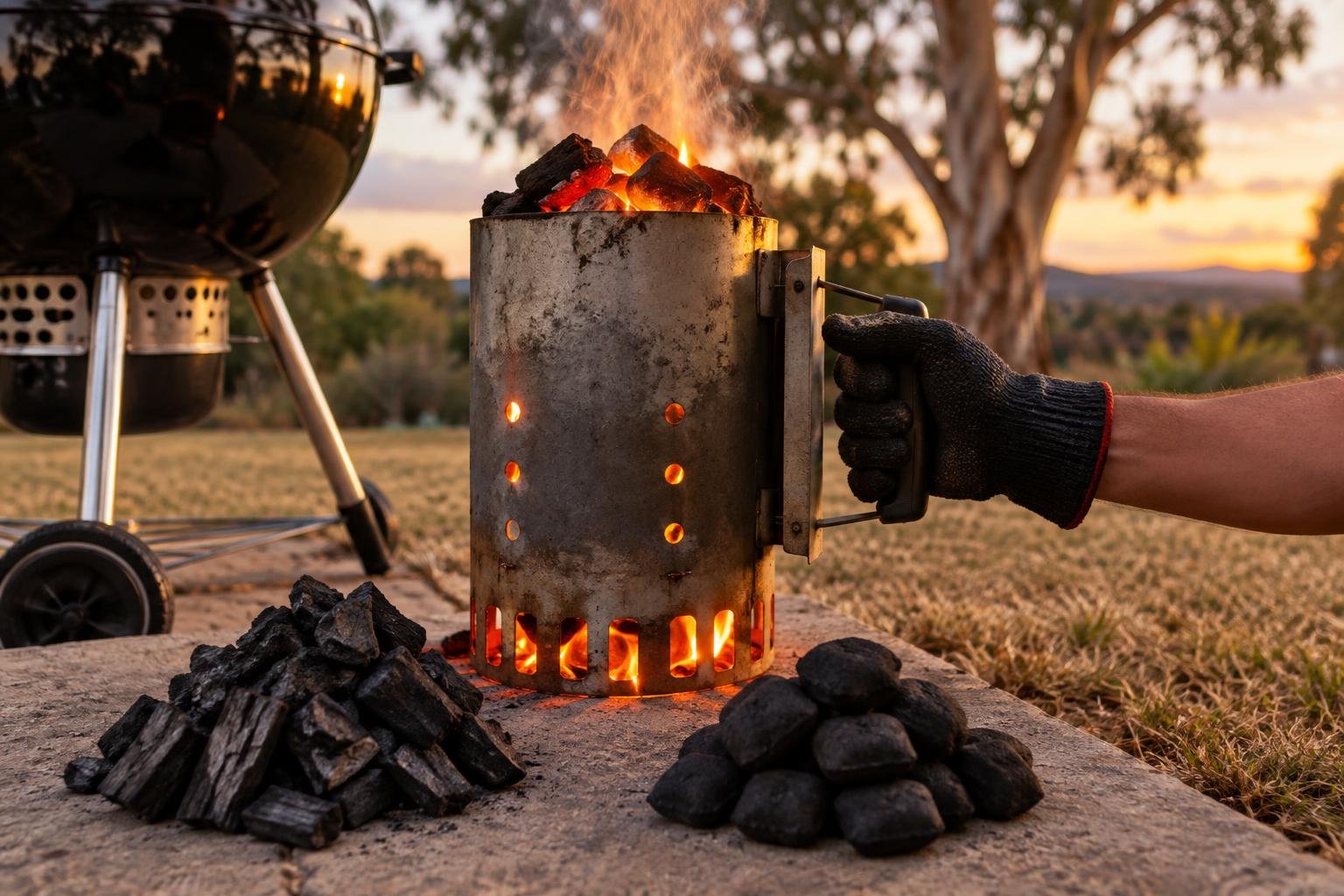
Lump charcoal is wood that has been burnt slowly in a low oxygen kiln until only the carbon is left. It arrives as irregular chunks that still look like the branch or root they came from. In Australia the good stuff is usually mallee root, a dense hardwood from the dry inland. Producers grade it by lump size, and Wattle and Flame is a clear example, selling 20 to 35mm for fast searing, 35 to 70mm as the everyday grade, and 70mm and up for long cooks.
Briquettes are made, not found. Charcoal fines and other by-products are ground down, mixed with a binder and pressed into those uniform pillow shapes. Because every piece is the same size and density, they burn at close to the same rate as each other. That is the entire point of them.
The charcoal vs briquettes braai answer, in one table
| What matters | Lump charcoal | Briquettes |
|---|---|---|
| Time to cooking heat | Faster, often 15 to 20 minutes in a chimney | Around 30 minutes with firelighters, per Heat Beads |
| Peak heat | Higher, good for searing | High and even, 230 to 290 degrees for the Heat Beads Original |
| How long it lasts | Shorter, and it fades unevenly | Usable heat above 150 degrees for more than four hours in a covered kettle |
| Ash left behind | Less | More, and it can smother the fire if you do not clear it |
| Smell while lighting | Clean, just woodsmoke | Can smell chemical until fully ashed over |
| Best for | Wors, chops, steak, anything quick | Potjie, roasts, low and slow, a long afternoon |
Heat: one burns hotter, the other burns longer
Heat Beads publishes the numbers for its Original BBQ Briquettes, and they are useful even if you buy another brand. The pack is rated for high heat of 230 to 290 degrees. The company also says that in a covered kettle, usable cooking heat above 150 degrees is available for more than four hours, so a big roast does not need topping up halfway.
Lump charcoal has no equivalent published figure, and you should be suspicious of anyone who gives you one. It depends on the wood, the lump size and how open your vents are. What it reliably does is light quicker and hit a higher peak, then fall away faster. Big lumps last noticeably longer than small ones, which is why producers sell by size at all.
There is a control difference too. Lump responds quickly when you open or close a vent, which is handy on a kettle and worth knowing if you are still deciding between models in our kettle braai vs Weber guide. Briquettes respond more slowly, which feels less exciting and is exactly what you want under a pot.
Lighting, and the firelighter taste
The complaint South Africans make about briquettes here is that the first braai tasted of paraffin. That is usually the firelighters, not the fuel, and it is fixable. Wait until the coals are fully coated in grey ash before any food goes on. Heat Beads puts that at around 30 minutes with firelighters, and a chimney starter cuts it down without using any firelighter at all.
A chimney starter is a metal cylinder with holes in the bottom. You put a sheet of newspaper or a natural wood wool lighter underneath, fill the top with fuel, and the draught does the rest. It is the single cheapest upgrade to any braai and it works with both fuels.
Ash, cost and what happens to the leftovers
Briquettes leave more ash. On a long cook that ash builds up in the bowl and starts choking the air supply, so a kettle with a decent ash system earns its keep. Lump leaves less, but it does throw sparks when it first catches, which is worth knowing if your setup sits near anything that burns.
Leftovers go the other way. Heat Beads says its briquettes can be put out by closing the vents and then topped up and used again next time, and that stored dry they keep more or less forever. Half a bag of lump that has been rained on is far less forgiving.
What to buy in Australia
Three things cover it: a bag of each fuel, and the tool that lights both without the paraffin taste. No prices are quoted here, because they move about and a number written today would be wrong by summer.
Some links below are affiliate links. Same price for you, a small commission for the braai fund. As an Amazon Associate, Braai Mate earns from qualifying purchases.
Heat Beads BBQ Briquettes 10 kg
The Australian default, and the fuel whose published heat and burn figures are quoted further up this page. The 10 kg bag is the sensible size if you braai most weekends, because briquettes keep more or less forever in a dry shed.
Affiliate link. Same price for you, a small commission for the braai fund.
Mallee Root Lump Charcoal for BBQ Spit Roast Cooking 20KG
Australian mallee root, in a bag big enough to last a season. This is the fuel for wors, chops and anything you want seared rather than slow cooked. Buy lump in bulk only if you have somewhere dry to keep it, because damp charcoal is a miserable way to start an afternoon.
Affiliate link. Same price for you, a small commission for the braai fund.
Weber Rapidfire Compact Charcoal Chimney Starter BBQ
A small steel chimney with a heat shield and a second handle for tipping the coals out. Weber says it lights charcoal or briquettes in under 15 minutes without lighter fluid, which is the whole reason to own one. Any solid chimney will do, but this is the one most likely to still be in the shed in ten years.
Affiliate link. Same price for you, a small commission for the braai fund.
One more thing, and it needs no link. Long tongs and a leather glove. Lump charcoal spits when it first catches, and the glove is what lets you tip a chimney of live coals without drama.
There is one shelf most people walk straight past. A fair few of the South African shops here sell braai charcoal as well as the wors and the chutney, sometimes under the hardwood names you knew at home. Stock moves around and no two shops carry the same thing, so ring ahead rather than driving across town on hope. Our state by state directory of South African shops is the place to start.
If you would rather build the fire the way it was done at home, our guide to the best wood for a braai in Australia covers the local hardwoods worth burning, and the potjie pot guide explains how many coals a pot actually wants.
The day neither one is allowed
This is the part that catches people out. On a total fire ban day, solid fuel is off. The NSW Rural Fire Service Schedule of Standard Exemptions lists electric and gas appliances under clause 12, with conditions, and there is no equivalent exemption for a charcoal or briquette fire. It makes no difference which bag you bought.
Rules differ by state and the conditions matter, including clear ground around the appliance and a water supply within reach. We keep the state by state version in our braai fire rules guide, and it is worth a look before summer rather than during it.
Frequently asked questions
Can you mix charcoal and briquettes in the same braai?
Yes, and plenty of people do. A common approach is a base of briquettes for a steady bed, with a handful of lump thrown on top when you want a burst of heat for searing. Light them together so everything ashes over at the same time.
Which is better for boerewors?
Lump charcoal, most of the time. Wors wants medium heat and about 20 minutes on the grid, and lump gets you there faster without a long wait. Our guide to how to braai boerewors covers the coil and the timing.
Do briquettes make the food taste like chemicals?
They should not, once they are fully ashed over. The smell people notice comes off during lighting. If food is still tasting off, the likely culprits are firelighters added too late or meat going on too early.
Is lump charcoal more expensive?
Usually yes per kilo, and it burns through faster, so the gap in real cost is wider than the shelf price suggests. Briquettes are the cheaper way to run a long cook. We have not quoted prices here because they move about constantly.
What about the wood fire we used at home?
You can still do it, and it is the best flavour of the three. It just takes about an hour to burn down to usable coals, and Australian hardwoods behave differently from what you are used to. Wood is also the first thing banned when conditions turn.
So which bag goes in the trolley
The charcoal vs briquettes braai question has no single winner, and anyone who tells you otherwise is usually selling one of them. If you are buying one bag this weekend and the plan is wors and chops, buy lump charcoal. If the plan is a potjie or a roast that will sit there for hours, buy briquettes. If you braai often, keep both in the shed and stop thinking about it, because the fuel is not the hard part of a good braai.
Next step: check whether your state is in its fire danger period before you light anything, then get the fire started properly with a chimney rather than a handful of firelighters.