Caramel Treat substitute Australia: what to buy instead
You are standing in the baking aisle at Woolworths with a phone in one hand, a recipe in the other, and no idea what to do. Somebody is having a birthday, somebody has requested a Peppermint Crisp tart, and the one tin the recipe insists on does not exist in this country. If you have typed caramel treat substitute Australia into a search bar in the last week, this is for you. The short version is that there is a very good answer, it costs about the same, and it is sitting two shelves down from where you are looking.
Table of Contents
What Caramel Treat actually is
Caramel Treat is Nestlé South Africa’s tinned caramel. It comes in a 360g tin, it is thick enough to stand a spoon in, and Nestlé describes it as a creamy caramel dessert that you can eat straight or use as a topping. In practice, almost nobody in South Africa eats it straight. It goes into a Peppermint Crisp tart, a banoffee, a fridge tart, or onto a spoon at eleven at night when nobody is watching.
The important thing for our purposes is what is in it. It is caramelised milk and sugar. That is it. It is not a toffee sauce, it is not a syrup, and it is not the thin brown stuff in a squeeze bottle next to the ice cream cones. Once you know that, finding the Australian version stops being guesswork.
Caramel Treat substitute Australia: the one-tin answer
Nestlé Top ‘n’ Fill Caramel. That is the answer. Same company, same idea, different country and a different name on the label.
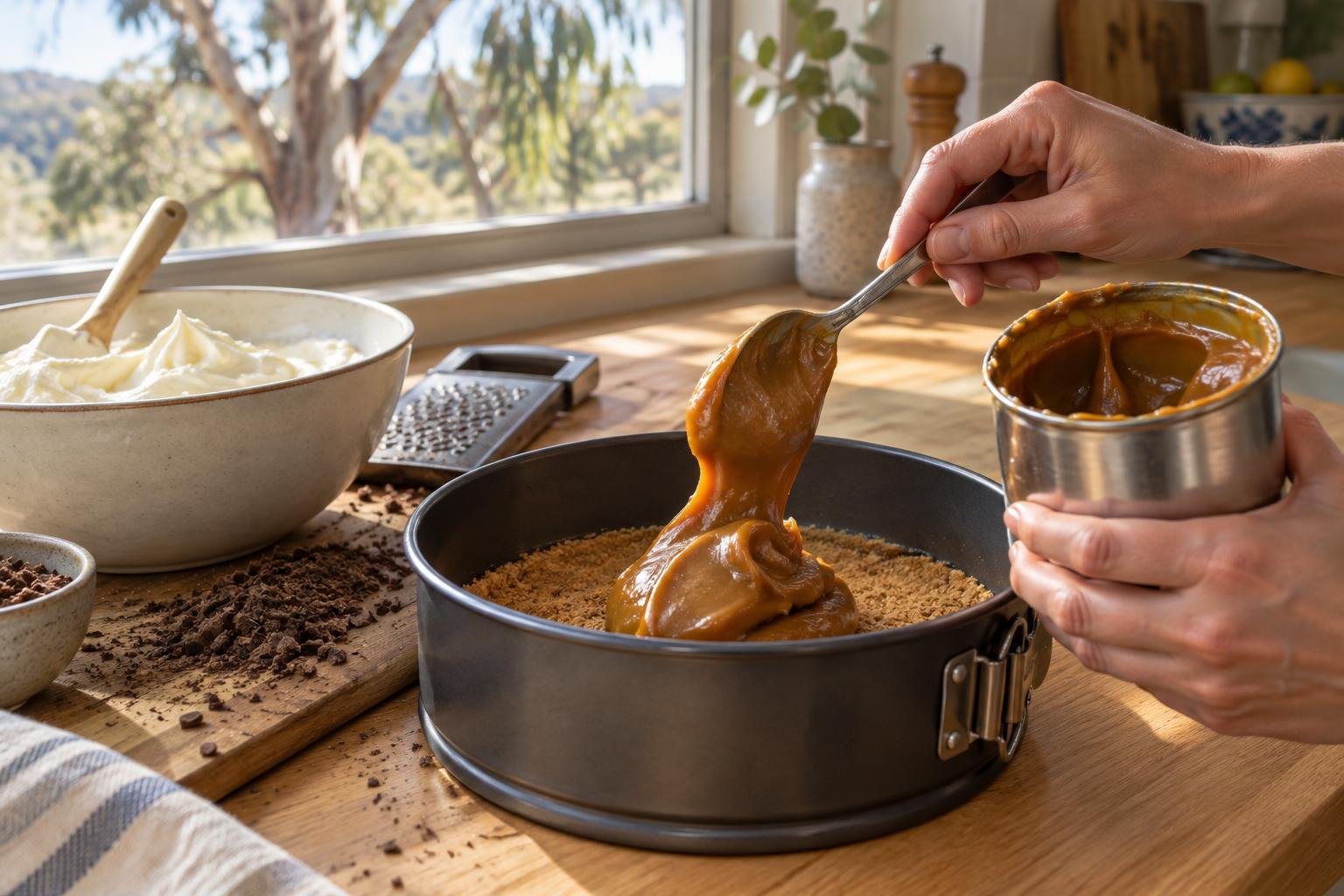
Top ‘n’ Fill is sold in Australia in a can, usually 380g or 395g depending on the size your shop stocks, and it lives in the baking aisle right next to the sweetened condensed milk. Not with the dessert toppings. Not with the jams. Next to the condensed milk, which makes sense once you know it is essentially condensed milk that has already been cooked into caramel for you.
Nestlé Australia’s own advice is worth reading before you open it. On the Nestlé Australia cooking FAQ page they say Top ‘n’ Fill has been designed to be used straight from the can and does not need further cooking, and that heating it will make it thinner and runny. That last bit matters. Half the people who complain that their tart did not set have gently warmed the caramel first because it felt stiff. Do not. Stiff is the point.
So when someone asks for the best caramel treat substitute Australia has on the shelf, this is not a compromise. It is the same product wearing a different jumper.
Where to find it
Top ‘n’ Fill turns up in the big supermarkets and most independents. Look in the baking aisle, low shelf, near the condensed milk and the evaporated milk. If your local IGA has a decent baking section it will usually be there too.
If you specifically want the South African tin with the South African label, the expat grocers stock it, and we keep a running list of those in our state by state directory of South African shops in Australia. Be honest with yourself about whether you are buying the ingredient or buying the label. Both are legitimate reasons. One of them costs more.
The differences that actually matter
I have made the same fridge tart with both tins, on the same day, in the same kitchen, because that is the sort of thing you end up doing when you run a braai website. Here is what I found.
Thickness. Both are thick. Top ‘n’ Fill in my tin was very slightly looser straight from the can, which made no difference at all once it was folded through whipped cream and left overnight.
Sweetness. Close enough that nobody at the table picked a favourite, and I did not tell them there was a difference until afterwards.
Colour. Marginally paler in the Australian tin. In a tart layered with crushed green and brown chocolate, nobody will ever notice.
Tin size. This one is real. A South African recipe assumes 360g. An Australian tin may be 380g or 395g. If you are making one tart, use the lot and move on. If you are scaling a recipe up for a crowd, weigh it, because 35g extra per tin adds up and a fridge tart that does not set is a sad thing to carry to a braai.
If you cannot find a tin at all: making your own, safely
There is an old trick where you boil an unopened tin of condensed milk for a couple of hours and it turns into caramel. Plenty of us grew up with it. Nestlé Australia now says plainly on that same FAQ page that boiling the tin is not recommended because it is not safe, and cans really do burst when the water boils dry and the metal is exposed. Hot caramel at pressure is not a story you want to tell.
Their alternative is a saucepan, and it takes under ten minutes:
- Tip one 395g tin of sweetened condensed milk into a saucepan.
- Add 30g of butter and 2 tablespoons of golden syrup.
- Stir over a moderate heat until it comes to the boil.
- Keep stirring constantly for another five to seven minutes, until it thickens.
Let it cool completely before it goes anywhere near cream or a biscuit base. It will not be identical to the tin, it is a shade lighter in flavour and it firms up more once chilled, but it works, and you made it yourself, which counts for something when the shop has sold out on the Saturday before Christmas.
The other options, ranked honestly
Dulce de leche. Same principle, South American name. If you see a jar in the international aisle, it will do the job. Check the texture through the glass; some are pourable, and pourable is no good to you.
Supermarket own brand caramel filling. Coles and Woolworths have both sold a house version at various times. Read the label. If it says caramel filling and the first ingredients are milk and sugar, you are fine. If it says caramel flavoured topping, put it back.
Carnation Caramel. The British tin, occasionally imported. Same family, same job.
Caramel topping sauce. No. This is the one that ruins tarts. It is thin by design, it never sets, and it will turn your fridge tart into a soup with biscuits in it.
If you are working through a longer shopping list of things that do not exist here, our guide to South African ingredient substitutes in Australia covers the rest of the trolley, and the tennis biscuit substitute post handles the base of the very tart you are probably reading this for.
Quick answers
Is Top ‘n’ Fill the same as Caramel Treat?
Not identical, but the same kind of product from the same company, and interchangeable in every recipe I have tried.
Can I use condensed milk instead?
Not straight from the tin. Unheated condensed milk is sweet and pale and will not set the way caramel does. Cook it first, using the saucepan method above.
Do I need to heat Top ‘n’ Fill before using it?
No, and you should not. Nestlé says heating makes it runnier, which is the opposite of helpful.
How much do I need for a Peppermint Crisp tart?
One tin. Whatever size your shop sells, one tin is the standard quantity for a single tart.
The short version
The next time you need a caramel treat substitute Australia will actually sell you, walk past the dessert toppings entirely and go to the condensed milk. Nestlé Top ‘n’ Fill, one tin, straight in, no heating. Your tart will set, your gran will not be able to tell, and you can save the imported tin for a day when the label matters more than the caramel does.
And if you are building the rest of the spread around it, the Mrs Balls chutney substitute guide sorts out the savoury end of the same problem.