An aartappel broodjie is a savoury loaf built on grated raw potato, cheese and a packet of potato bake. Not a sandwich, not a yeast bread. You stir it in one bowl, press it into a buttered tin, and bake it while the fire gets going.
The only real problem for an expat is the packet. South African recipes call for Knorr potato bake, and Australian supermarkets do not sell it. Below is our working recipe and a homemade mix that does the same job. The mix uses things Coles and Woolworths actually stock. After that come the three mistakes that turn this loaf into a wet brick.
Table of Contents
What it is, and what it is not
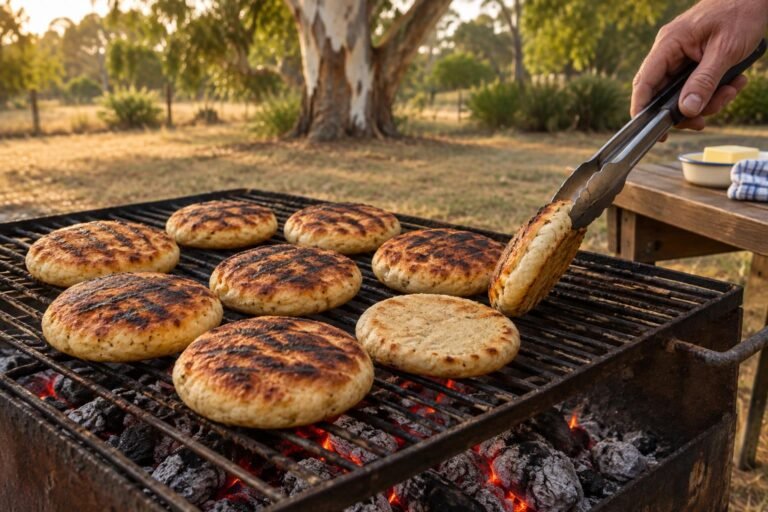
“Broodjie” trips people up, because the word does double duty. At a braai it usually means a braaibroodjie, the toasted sandwich off the grid. This is a different animal. Here the broodjie is a small loaf, with the aartappel grated through it raw.
It is closer to a scone dough than to bread. No yeast, no proving. The baking powder lifts it, the potato keeps it moist, and the cheese and the packet do the seasoning. From bowl to oven is about fifteen minutes.
It is also not potbrood, which is a yeast dough baked in a camp oven under coals. This one was written for a kitchen oven. There is a note further down for doing it over a fire.
The packet problem: potato bake mix in Australia
The South African packet is Knorr Cheese and Bacon Potato Bake, a 43 g sachet. Its ingredient list tells you what it does in the loaf: maize starch and maltodextrin to thicken, then wheat flour, salt, cheese powder, whey powder, onion, white pepper and parsley. It is a thickener with a cheese and onion seasoning through it.
Australia has no matching sachet. Continental is the same company’s Australian brand. Its own potato bake recipe reaches for a French onion soup packet rather than a potato bake one. That tells you the product is not on the shelf here.
So you have three ways through. Buy the Knorr packet from a South African grocer, and our state by state directory of South African shops in Australia lists who stocks it. Use a Continental French onion soup sachet, which works but pulls the loaf towards onion. Or mix your own, which is what we would do.
Our homemade potato bake mix
This makes about one 43 g packet’s worth, enough for one loaf. It is not the Knorr formula and we are not pretending it is. It is our own mix, put together to do the same three jobs: thicken, salt, and carry the cheese and onion flavour.
- 2 tablespoons cornflour
- 1 tablespoon plain flour
- 2 tablespoons finely grated parmesan
- 1 tablespoon full cream milk powder
- 2 teaspoons onion powder
- 1 teaspoon chicken stock powder, or vegetable stock powder for a meat free loaf
- 1 teaspoon dried parsley
- ½ teaspoon salt
- ½ teaspoon white pepper
- ¼ teaspoon garlic powder, optional
Whisk it together and use it straight away, or keep it in a jar. The parmesan does the heavy lifting, because it is dry enough to behave like a cheese powder rather than melt into a lump. No parmesan? Leave it out and add another half teaspoon of stock powder.
Cornflour is the thickener, and in Australia it is the same product a South African recipe calls Maizena. Our Maizena versus cornflour guide covers the catch, which is that the wheaten and maize versions differ on an Australian shelf.
The aartappel broodjie recipe
This makes one loaf in a 21 cm tin, about eight thick slices. Fifteen minutes of grating and stirring, then forty to fifty minutes in the oven. The quantities are our own working version of a recipe that does the rounds in South African Facebook groups. Watch the milk rather than the clock.
Aartappel broodjie
Ingredients
Method
- Heat the oven to 180°C and butter a 21 cm loaf tin thickly on the base and up the sides.
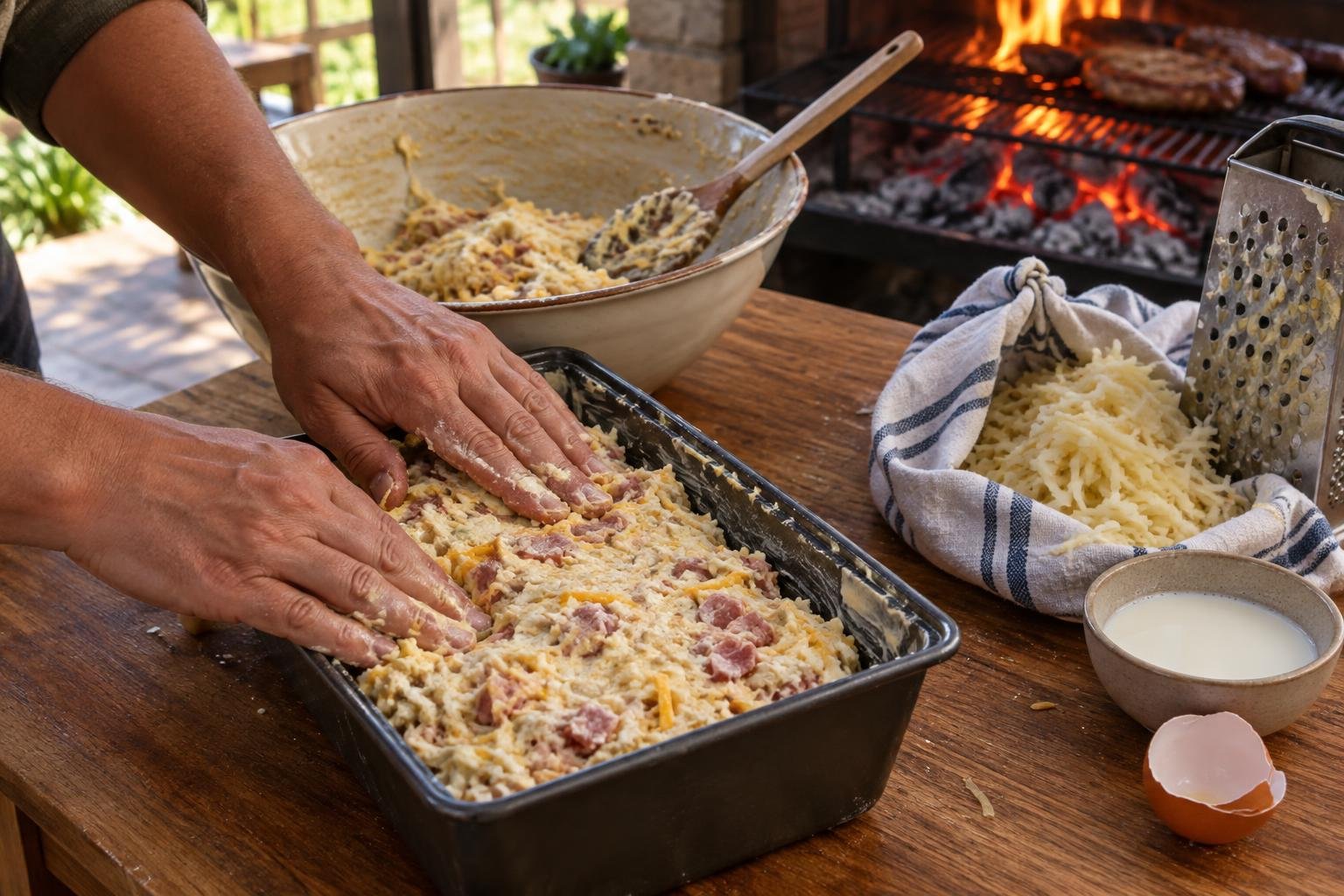
- Peel and coarsely grate the potatoes, then squeeze them hard in a clean tea towel until the water stops running.
- Stir the flour, baking powder and potato bake mix together in a large bowl.
- Add the grated potato, the cheese and the bacon if you are using it, and toss until every strand is coated in flour.
- Beat the egg into 80 ml of the milk, pour it in, and work it through with a wooden spoon until no dry flour is left.
- Add the last 20 ml of milk only if the dough will not come together. It should be thick and sticky, not pourable.
- Press the dough into the tin, level the top, and bake for 40 to 50 minutes until deep golden and firm in the middle.
- Rest the loaf in the tin for 10 minutes, then turn it out onto a rack. Serve warm with butter.
Notes
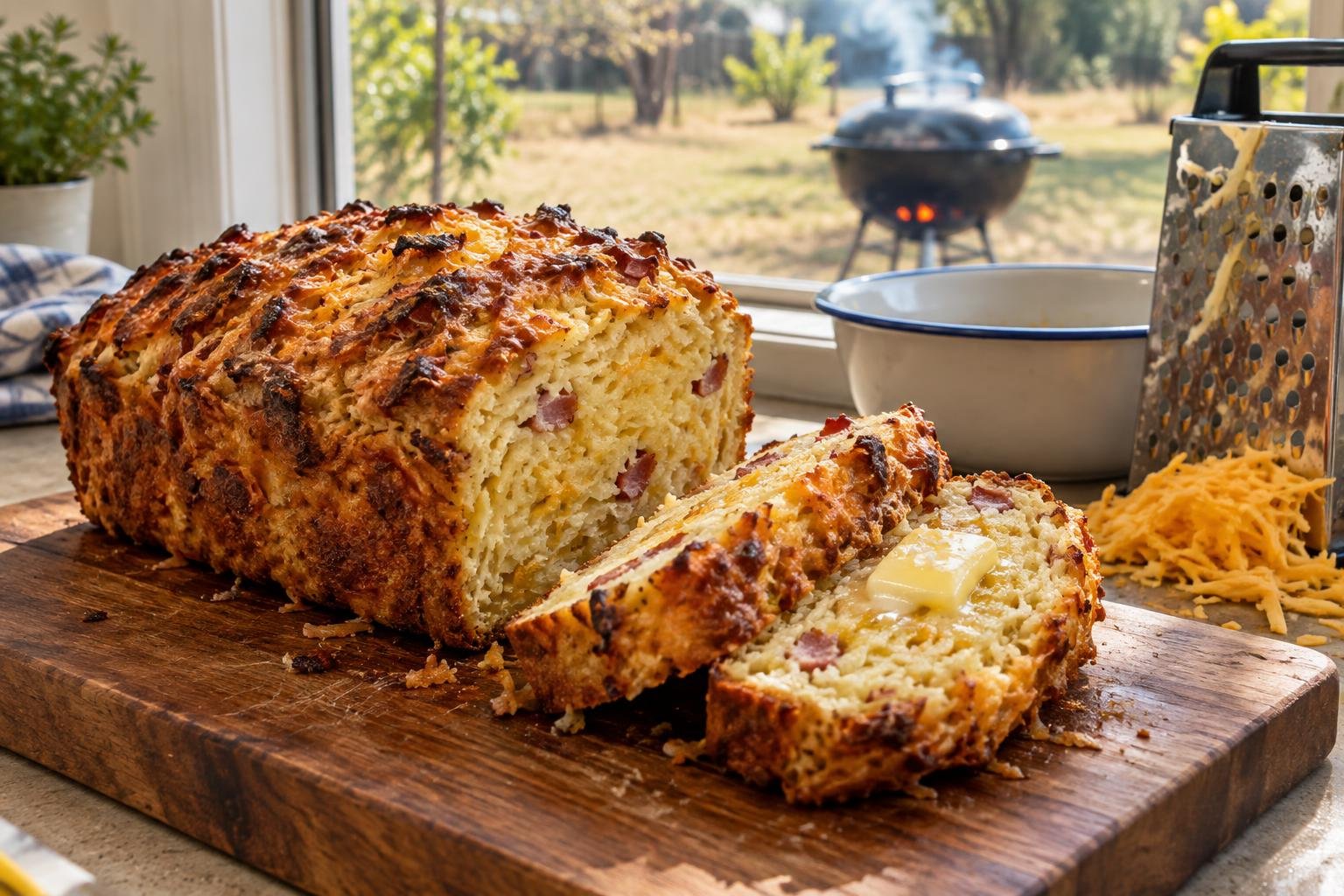
It comes out deep golden on top, firm to a press in the middle, and heavy for its size. The inside is dense and a bit chewy, somewhere between a scone and a potato rosti. Warm, with butter melting into it, is how most of it disappears.
Swaps and variations
The dough is forgiving, so long as the wet and dry stay in balance. These are the versions we would stand behind.
- Garlic and herb instead of cheese and bacon. Knorr sells a garlic and herb potato bake in the same 43 g size. It makes a quieter loaf that goes better next to a curry than next to chops.
- Sweetcorn instead of bacon. Half a cup of drained tinned corn, folded in at the end. It keeps the loaf meat free and adds little pockets of sweetness against the salt.
- Spring onion and extra cheese. Four spring onions sliced thin, plus a handful of cheese scattered on top before it goes in. That top cheese goes brown and crisp and is the best part.
- Bacon browned first. The original adds it raw, which works. Frying it first gives more flavour and less fat in the crumb, at the cost of one extra pan.
Where it goes wrong
Three things account for almost every heavy, damp loaf.
The first is the water in the potato. Grated raw potato holds a surprising amount, and all of it ends up in your dough. Squeeze it hard in a clean tea towel until the water stops running. That one step decides whether the loaf is light or sodden.
The second is the milk. Eighty millilitres looks far too little against a bowl of flour, and the urge to pour more is strong. Resist it. This is a thick, sticky dough you press into the tin, not a batter you pour. Add the last twenty millilitres only if dry flour is left in the bowl.
The third is the tin. Cheese and potato both stick, and a thin smear of butter will not save you. Butter the base and sides properly, or line the base with baking paper. Then let the loaf sit for ten minutes before you turn it out, so it firms up enough to hold together.
Doing it over the coals
You can bake this in a cast iron pot by the fire, and the original says to double the batter for a bigger loaf in a potjie. Grease the pot the same way and put the lid on. Stand it on a low bed of coals, with more coals on the lid so heat comes from above too. Keep the base gentle, because a flat potjie bottom on hot coals burns long before the middle cooks.
Check it with a skewer rather than a timer, since no two fires are the same. Our potjie pot guide for Australia covers pot sizes and heat control.
What to serve it with
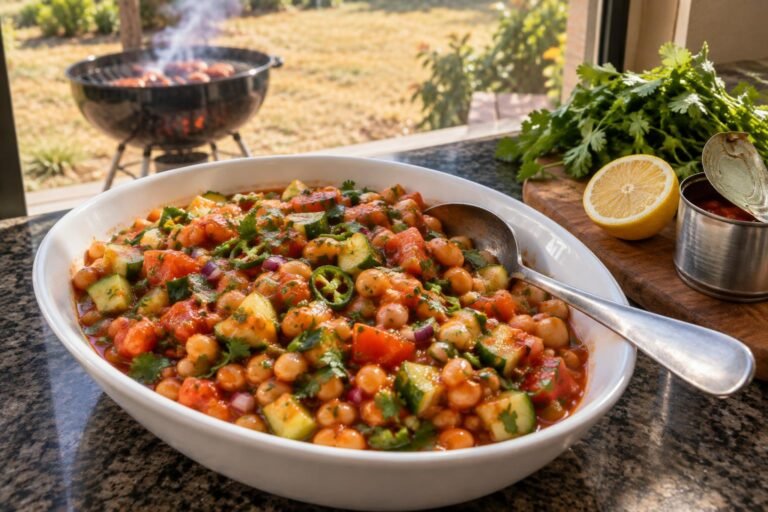
It belongs next to the meat, in place of a bread roll or a potato salad. It is rich, so it wants something sharp alongside it. A bean salad or a tomato and onion slaai does that, and our eight braai side dishes from an Australian supermarket has more.
Leftovers beat the fresh loaf in one specific way. Cut a thick slice, fry it in butter until both sides are crisp, and put a fried egg on it. That is a Sunday breakfast worth making the loaf for.
Frequently asked questions
What is an aartappel broodjie?
It is a South African savoury loaf made from grated raw potato, grated cheese, flour, baking powder and a packet of potato bake mix, baked in a loaf tin. The name is Afrikaans for potato bread roll. It is not the same as a braaibroodjie, which is a toasted sandwich off the grid.
What can I use instead of Knorr potato bake in Australia?
Mix your own from cornflour, plain flour, parmesan, milk powder, onion powder, stock powder, parsley, salt and white pepper, using the quantities in this post. A Continental French onion soup sachet is the supermarket shortcut, though it takes the loaf towards onion. South African grocers in Australia also stock the Knorr packet.
Do I really have to squeeze the grated potato?
Yes. Grated raw potato is mostly water, and any water you leave in goes straight into the dough. A loaf made with unsqueezed potato comes out dense and damp in the middle no matter how long you bake it.
Can I make an aartappel broodjie without the packet mix at all?
You can. Use two tablespoons of cornflour, a teaspoon of salt, two teaspoons of onion powder and half a teaspoon of white pepper. Add an extra half cup of grated cheese. It will be a plainer loaf, closer to a cheese scone, but it holds together and tastes good.
What sort of potatoes should I use?
Any everyday potato works, since it is grated and squeezed rather than sliced. Peel them, grate them last so they do not go grey, then squeeze.
Can I freeze it?
Yes. Cool it fully, slice it, and freeze the slices with baking paper between them. Toast the slices from frozen or fry them in butter. The loaf also keeps three or four days in the fridge, though it is best warmed through rather than eaten cold.
Make it once with the packet if you can find one, then once with the homemade mix, and see whether anyone picks the difference. Ours could not. If you are still hunting for the South African half of your pantry, our guide to South African ingredient substitutes in Australia is the place to start.