Some braais happen in a unit with a balcony the size of a bath mat. Some happen on a total fire ban day, when the coals are not going anywhere near the grid. And some happen on a Tuesday night when there is meat but no bread. Braai scones are the answer to all three.
Flour, cheese, olives, a spoon of mayonnaise and a cup of milk. Into a muffin tin, into the oven, and twelve minutes later there is hot bread on the table.
South Africans know them as skon broodjies, and they turn up in every Afrikaans braai group under a dozen names. This is our working version, built for an Australian kitchen. The flour, the cheese and the mayonnaise you can actually buy here, and the small fixes that keep them from coming out flat.
Table of Contents
What braai scones are
They are savoury scones baked in a muffin tin instead of cut on a board. No yeast, no rising time, no kneading. The mayonnaise does the job that butter and egg do in a normal scone, which is why the dough comes together in one bowl with a spoon. The cheese goes in and on top, so the outside bakes to a crisp golden lid while the inside stays soft.
They sit somewhere between a scone, a muffin and a bread roll. Split one while it is hot, put butter in the middle, and eat it next to a chop. That is the whole brief.
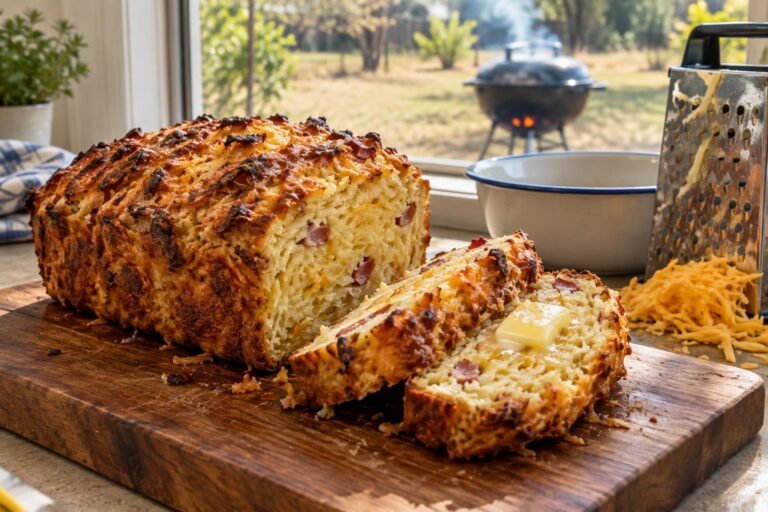
The version doing the rounds in the Facebook groups is a black olive and cheese one, and that is the base recipe below. Once you have made it once, the flavour can go anywhere. Biltong, jalapeño, bacon and spring onion all work, and the plain cheese version is what the kids will eat.
The Australian shopping list
Three ingredients need a word, because the South African version assumes South African shelves.
Self-raising flour. Every supermarket has it. White Wings self-raising flour lists wheat flour and raising agents and nothing else, so there is no salt in the bag. Add half a teaspoon yourself or the scones taste of nothing. If you only have plain flour, use two cups of plain flour and three teaspoons of baking powder, sifted together.
Cheese. “Cheddar” in South Africa is “tasty” here. Any block of tasty cheddar from Bega or the supermarket brand does the job. Grate it yourself; the pre-grated bags are coated to stop clumping and they do not melt as well on top.
Mayonnaise. Use a whole-egg mayonnaise or a tangy one, not a sweet creamy salad dressing. The mayonnaise brings fat and a little sharpness to the dough. If the jar tastes sweet on a spoon, it will taste sweet in the scone.
Olives are the easy part. Pitted kalamata or plain black olives from the deli or a jar, drained well and chopped. If the household is split on olives, make half the tin plain and put the olives in the other half; nobody will notice the difference from the outside. For the rest of the South African pantry in an Australian supermarket, our ingredient substitutes guide covers it.
The braai scones recipe
This makes eight to nine scones in a standard twelve-hole muffin tin, enough for four people with a braai on the table. Ten minutes to mix, about fifteen in the oven. The quantities are our own working version of the recipe that does the rounds in Afrikaans braai groups, adjusted for Australian flour and cheese. The card has the list and the steps, and the print button gives you a clean copy.
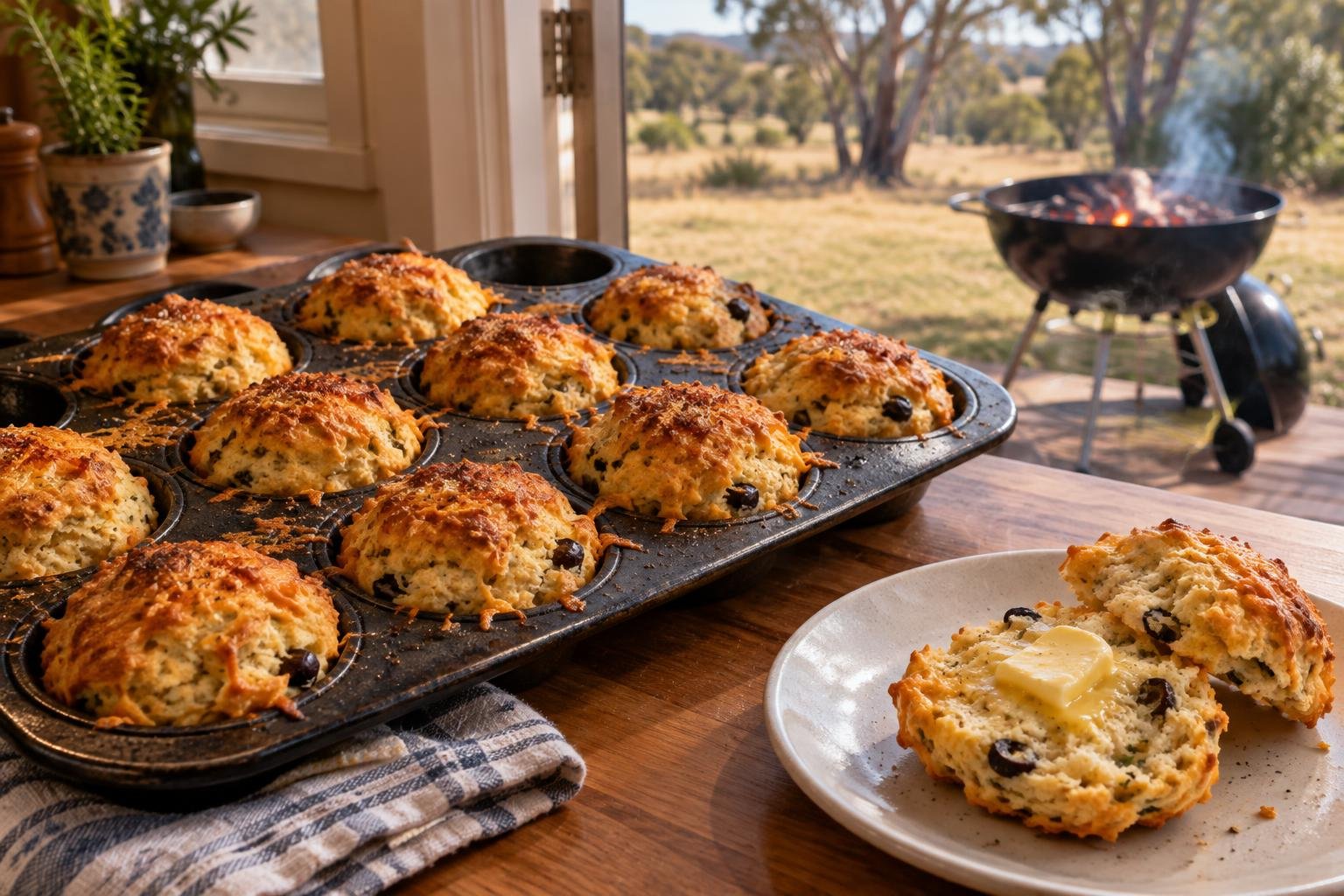
Braai scones (skon broodjies)
Ingredients
Method
- Heat the oven to 220 C, or 200 C fan-forced, and grease a twelve-hole muffin tin well, even a non-stick one.
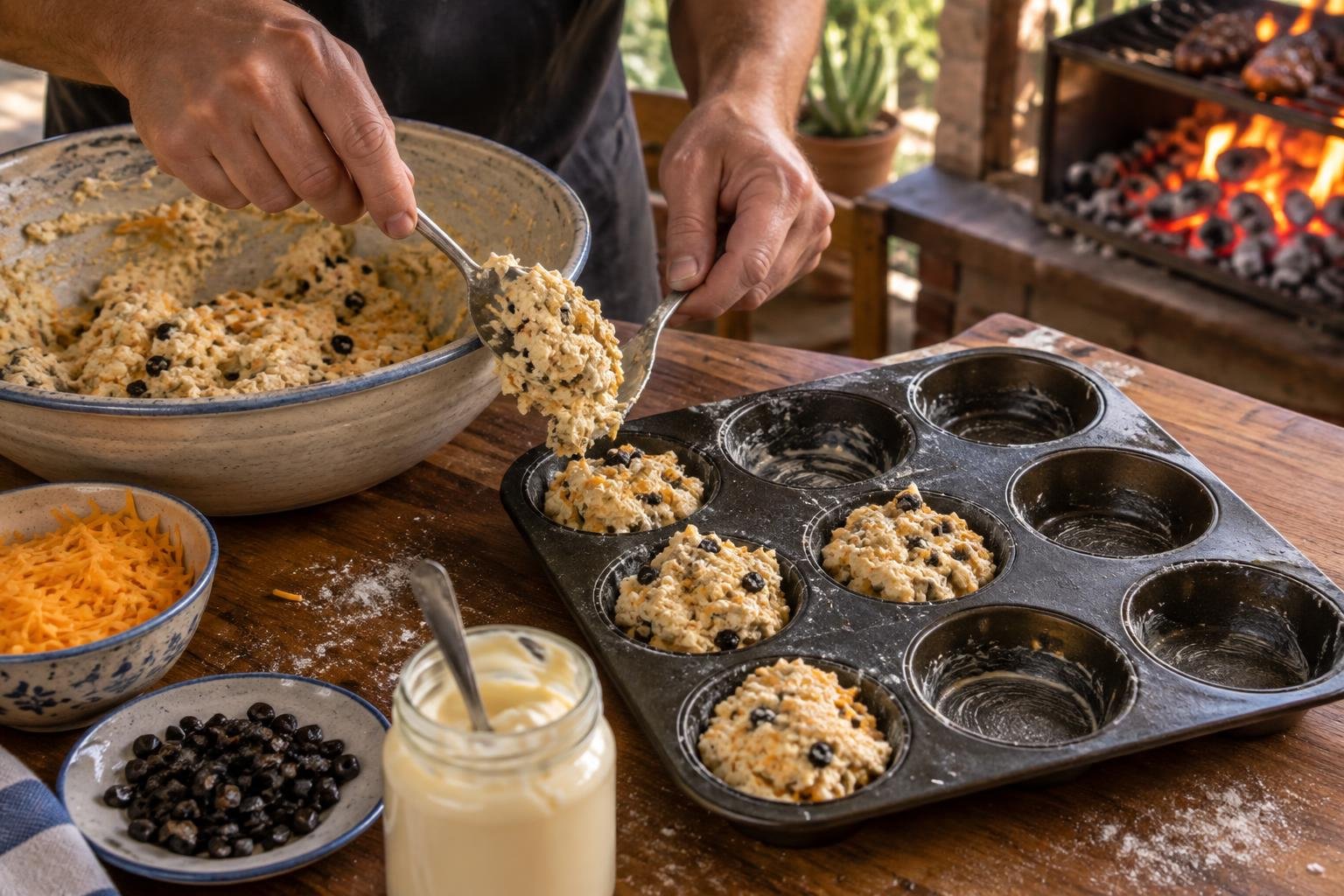
- Stir the flour, salt, sugar, grated cheese and chopped olives together in a large bowl.
- Whisk the mayonnaise and milk together in a jug until smooth.
- Pour the milk mixture into the dry ingredients and fold with a spoon only until the dry flour disappears. The dough should look rough and sticky, not smooth.
- Spoon the dough into the tin, filling each hole about two thirds. You should get eight or nine.
- Scatter a little extra cheese over each one and dust with paprika or cayenne.
- Bake for 10 to 14 minutes, without opening the door for the first ten, until risen and deep golden on top.
- Turn them out onto a rack and serve warm, split with butter.
Notes
They should come out with a crisp golden cheese top, a soft inside and a faint tang from the mayonnaise. If they are pale, the oven was not hot enough. If they are dense, the dough was overmixed. Both are covered below.
Swaps and variations
The base is forgiving, so change it to suit the table.
- Biltong. A handful of chopped biltong instead of the olives. Wet biltong works better than dry. If you make your own, the offcuts from the home biltong guide are exactly the right size.
- Jalapeño and cheese. Two tablespoons of chopped pickled jalapeño from a jar, drained. A little heat, a little sourness, and they go with wors.
- Bacon and spring onion. Fry three rashers, chop them small, cool, and fold in with two sliced spring onions. Cut the salt to a pinch.
- Sun-dried tomato and feta. Swap the olives for chopped sun-dried tomato and half the cheese for crumbled feta. Softer and richer.
- Plain cheese. Leave out the olives and add a second teaspoon of sugar. This is the one that disappears first when there are children.
Whatever goes in, keep the add-ins to about half a cup. More than that and the dough cannot hold them, and the scones fall apart when you split them.
Where they go wrong
Three faults account for nearly every flat or heavy tin.
The first is overmixing. Once the milk goes in, fold until you cannot see dry flour and then stop. The dough should look rough and sticky, not smooth. Every extra stir builds gluten and every bit of gluten makes them tougher.
The second is a cool oven. Scones want a hot start so the raising agents fire before the crust sets. Heat the oven properly, 220 C, or 200 C fan-forced, and do not open the door for the first ten minutes. If your oven runs cool, and a lot of rental ovens do, give it an extra five minutes of preheating.
The third is filling the holes to the top. The dough rises, and a full hole becomes a mushroom that sticks to the tin next to it. Two thirds full is right. Oil or butter the tin well, even a non-stick one, because melted cheese is glue.
Serving them at a braai
Split, butter, eat. That is the standard. They are at their best in the first half hour out of the oven, so time them for when the meat comes off. Chops, chicken and wors all work, and they soak up monkey gland sauce better than a bread roll does.
They also stand in for braaibroodjies when there is no grid space or no fire. Our braaibroodjies with Australian ingredients post is the one to use when you do have coals; these are for the balcony, the fire ban day and the weeknight. If you are not sure which days those are, the braai fire rules, state by state post has the answer for your state.
For the rest of the table, the eight braai side dishes from an Australian supermarket and the baked bean salad fill the gaps. If the braai is on 24 September, the National Braai Day plan works out the timing so the scones and the meat land together.
Frequently asked questions
Can I make braai scones without mayonnaise?
Yes. Rub 60 g of cold butter into the flour and add one egg to the milk. It is the traditional scone method and takes a few minutes longer. The mayonnaise version is quicker and a little more tender.
Can I bake them on the braai instead of the oven?
Yes, in a kettle braai with the lid on. Bank the coals to the sides, set the tin in the middle over indirect heat, close the lid and check after fifteen minutes. In a camp oven, use a trivet and coals on the lid. Roosterkoek is the better choice over an open grid.
How long do they keep?
Two days in an airtight container, though they are best warm on the day. Reheat for five minutes in a hot oven, not the microwave, so the cheese top crisps again. They freeze well for a month.
Why did my scones come out flat?
Usually old self-raising flour or a cool oven. Raising agents lose strength in an open bag after a few months, so check the date. And heat the oven properly before the tin goes in.
Can I use a normal baking tray instead of a muffin tin?
Yes. Drop heaped spoonfuls onto a lined tray with a gap between them. They spread a little more and lose the neat round shape, but they taste the same. Bake for the same time.
What is the difference between braai scones and roosterkoek?
Roosterkoek is a yeast dough cooked on the grid over the coals. Braai scones are a quick dough baked in the oven, no yeast, no rising and no fire needed. Both are braai bread; one needs an hour and coals, the other needs twenty minutes and an oven.
Put the oven on
Braai scones are the bread for the braai you were not sure you could have. One bowl, one tin, and hot bread on the table before the coals would have caught. Make the olive and cheese version once, then make it yours.
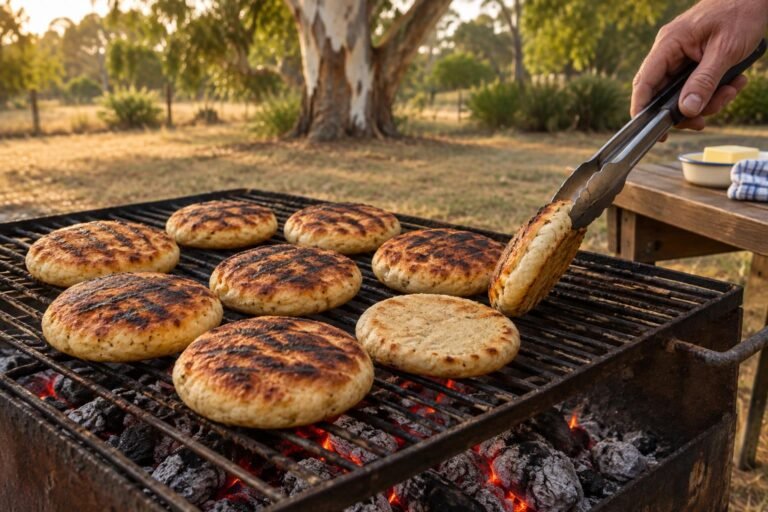
If the fire is going after all, the other braai bread worth knowing is roosterkoek, cooked straight on the grid, and it wants the same butter treatment.
And if an Australian at the table asks why there is bread with the barbecue, the braai vs bbq post will do the explaining while you eat.